

Hey there! As a stainless steel nut supplier, I often get asked about all sorts of technical details regarding our products. One question that pops up quite frequently is, "What is the modulus of elasticity of stainless steel nuts?" Let's dive right into it and break down this concept in a way that's easy to understand.
First off, what exactly is the modulus of elasticity? In simple terms, it's a measure of how stiff a material is. When you apply a force to an object, it will deform to some extent. The modulus of elasticity tells you how much it will deform under a given amount of stress. For stainless steel nuts, this property is crucial because it affects how they perform in different applications.
Stainless steel is a popular choice for nuts because of its excellent corrosion resistance, strength, and durability. But different grades of stainless steel can have slightly different moduli of elasticity. The most common grades used for nuts are 304 and 316 stainless steel.
For 304 stainless steel, the modulus of elasticity is typically around 193 GPa (gigapascals). This means that if you were to apply a certain amount of stress to a 304 stainless steel nut, it would deform less compared to a material with a lower modulus of elasticity. On the other hand, 316 stainless steel, which is known for its even better corrosion resistance, has a modulus of elasticity of about 190 GPa. The difference between the two is relatively small, but it can still have an impact in some applications where precise performance is required.

Now, you might be wondering why the modulus of elasticity matters when it comes to stainless steel nuts. Well, think about it this way. When you're using nuts to fasten two or more parts together, you want them to hold up under the forces they'll be subjected to. If the nut is too flexible (i.e., has a low modulus of elasticity), it might deform too much under stress, leading to loosening or even failure of the joint. On the other hand, if it's too stiff, it might be more prone to cracking or breaking.
Let's take a look at some specific types of stainless steel nuts and how the modulus of elasticity affects their performance. We offer a wide range of nuts, including Long Hex Nut, Capnuts, and Hex Nut.
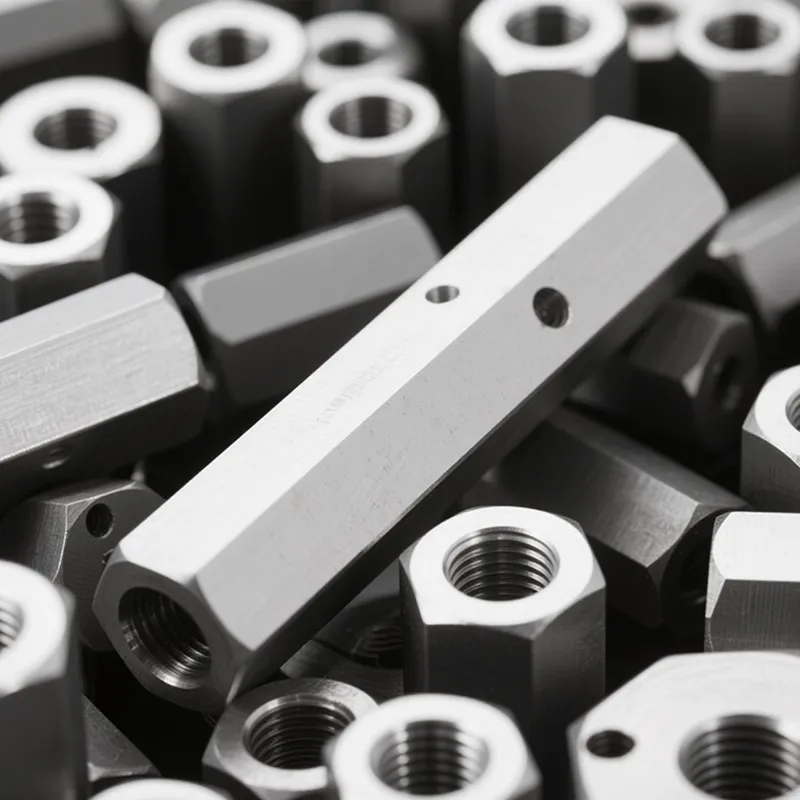
Long hex nuts, as the name suggests, are longer than standard hex nuts. This extra length provides more thread engagement, which can increase the strength of the joint. The modulus of elasticity of the stainless steel used in these nuts ensures that they can withstand the forces applied during tightening and while in service without excessive deformation.
Capnuts, on the other hand, are designed to protect the end of a bolt or stud. They have a domed top that covers the exposed threads, preventing corrosion and providing a more finished look. The modulus of elasticity of the stainless steel in capnuts helps them maintain their shape and integrity, even when subjected to external forces.
Hex nuts are the most common type of nut and are used in a wide variety of applications. Their performance depends on the modulus of elasticity of the stainless steel, as well as other factors such as the thread pitch and the quality of the manufacturing process. A higher modulus of elasticity means that the hex nut will be stiffer and less likely to deform under load.
In addition to the modulus of elasticity, there are other factors that can affect the performance of stainless steel nuts. The surface finish of the nut can play a role in how well it resists corrosion and how easily it can be tightened. A smooth surface finish can reduce friction, making it easier to achieve the desired torque. The thread quality is also important. Well-formed threads ensure a proper fit between the nut and the bolt, which is essential for a secure joint.
Another factor to consider is the temperature at which the nuts will be used. Stainless steel generally has good temperature resistance, but extreme temperatures can still affect its properties. At high temperatures, the modulus of elasticity of stainless steel may decrease slightly, which could lead to increased deformation. On the other hand, at low temperatures, the material may become more brittle, increasing the risk of cracking.
So, how do we ensure that our stainless steel nuts meet the highest standards of quality and performance? We start by carefully selecting the grade of stainless steel based on the specific requirements of the application. We work with trusted suppliers who provide high-quality raw materials. Our manufacturing process is also closely monitored to ensure that each nut is produced to precise specifications. We use advanced machinery and techniques to form the nuts, and we conduct rigorous quality control checks at every stage of production.
If you're in the market for stainless steel nuts, whether it's for a small DIY project or a large industrial application, we've got you covered. Our Long Hex Nut, Capnuts, and Hex Nut are all made from high-quality stainless steel with the right modulus of elasticity to ensure optimal performance.
We understand that every customer has unique needs, and we're here to help you find the perfect solution. Whether you need a specific size, grade, or quantity of nuts, just reach out to us. We're always happy to have a chat about your requirements and provide you with the best possible advice.
In conclusion, the modulus of elasticity of stainless steel nuts is an important factor that affects their performance and suitability for different applications. By choosing the right grade of stainless steel and ensuring high-quality manufacturing, we can provide you with nuts that will hold up under the toughest conditions. So, if you're looking for reliable stainless steel nuts, don't hesitate to get in touch with us. We're ready to assist you with your procurement needs and help you find the perfect nuts for your project.
References
- ASM Handbook, Volume 1: Properties and Selection: Irons, Steels, and High-Performance Alloys
- ASTM International Standards for Stainless Steel Nuts