

Hey there! As a supplier of stainless steel nuts, I often get asked a bunch of questions about these little but super - important fasteners. One question that pops up quite a bit is, "What is the elongation percentage of stainless steel nuts?" Let's dive right into it.
First off, let's understand what elongation percentage means. Elongation is a measure of how much a material can stretch before it breaks. In the case of stainless steel nuts, it's the percentage increase in length of the nut when it's under tension until it reaches its breaking point. This is a crucial property because it tells us how well the nut can withstand forces without failing catastrophically.
Stainless steel nuts come in different grades, and each grade has its own unique properties, including elongation percentage. For example, a common grade of stainless steel used for nuts is 304. This grade is known for its good corrosion resistance and decent mechanical properties. The elongation percentage of 304 stainless steel nuts typically ranges from about 40% to 60%. That means if you have a 304 stainless steel nut and you start applying a pulling force to it, it can stretch up to 40% - 60% of its original length before it snaps.
Another popular grade is 316 stainless steel. This grade is even more corrosion - resistant than 304, especially in harsh environments like marine settings. The elongation percentage of 316 stainless steel nuts is also in a similar range, usually around 40% - 60%. The reason for this similarity is that both 304 and 316 are austenitic stainless steels, which have relatively high ductility (the ability to be stretched).
Now, you might be wondering why the elongation percentage matters. Well, think about it this way. If you're using stainless steel nuts in a structure or a machine, they need to be able to handle some amount of stress without breaking. For instance, in a bridge, the nuts are under constant tension and compression forces. If the nuts have a low elongation percentage, they might break suddenly under stress, which could lead to a catastrophic failure of the structure. On the other hand, nuts with a higher elongation percentage can stretch and deform gradually, giving you a warning sign before they actually break.
There are also other factors that can affect the elongation percentage of stainless steel nuts. The manufacturing process plays a big role. If the nuts are forged properly, they tend to have better mechanical properties, including a higher elongation percentage. Heat treatment is another factor. Proper heat treatment can improve the grain structure of the stainless steel, making it more ductile and increasing the elongation percentage.
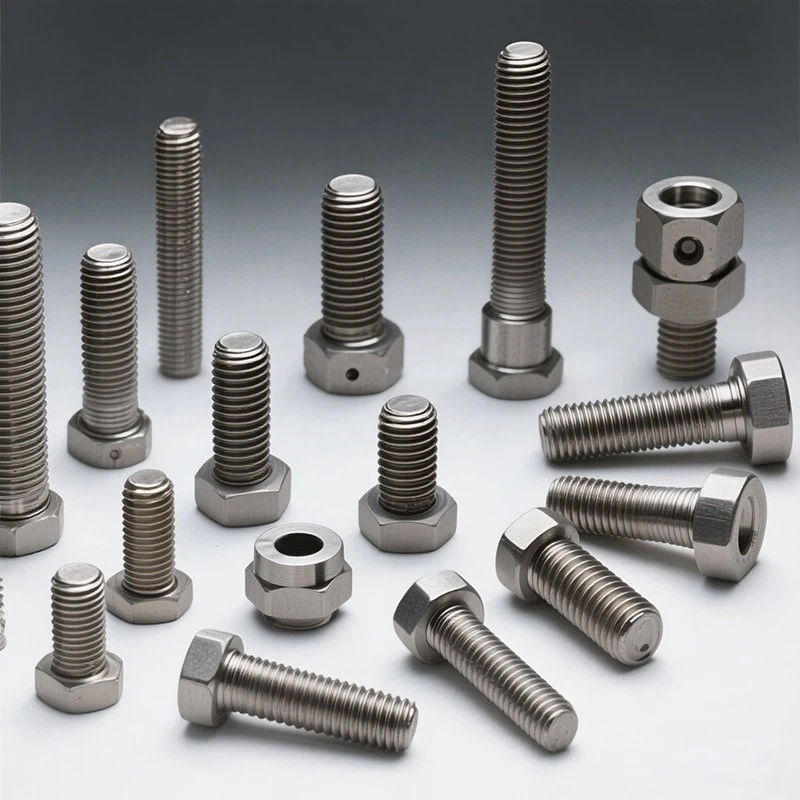
The size and shape of the nut can also have an impact. Smaller nuts might have different elongation characteristics compared to larger ones. And different shapes, like Barrel Nut, Hex Bolt Nut, and Metric Nuts, can behave differently under stress. For example, a barrel nut might distribute stress differently than a hex bolt nut, which could affect its elongation percentage.
When it comes to testing the elongation percentage of stainless steel nuts, there are standard procedures. Usually, a sample nut is placed in a testing machine that applies a gradually increasing pulling force until the nut breaks. The machine records the initial length of the nut and the length at the moment of breakage. Then, the elongation percentage is calculated using a simple formula:

Elongation percentage = ((Final length - Initial length) / Initial length) * 100
As a stainless steel nut supplier, I make sure that all our nuts meet the industry standards for elongation percentage. We have a strict quality control process in place. Our nuts are tested regularly to ensure that they have the right mechanical properties. This way, our customers can be confident that the nuts they buy from us will perform well in their applications.
If you're in the market for high - quality stainless steel nuts, whether it's Barrel Nut, Hex Bolt Nut, or Metric Nuts, you've come to the right place. We offer a wide range of stainless steel nuts in different grades, sizes, and shapes to meet your specific needs.
We understand that every project is unique, and you might have special requirements for the elongation percentage or other properties of the nuts. That's why we're always here to help. You can reach out to us to discuss your project in detail. We can provide you with samples so that you can test them in your own environment. And if you have any questions about the elongation percentage or any other aspect of our stainless steel nuts, don't hesitate to ask.
In conclusion, the elongation percentage of stainless steel nuts is an important property that can affect their performance in various applications. Different grades of stainless steel have similar elongation percentages, usually in the range of 40% - 60%. Factors like manufacturing process, heat treatment, size, and shape can influence this property. As a reliable supplier, we ensure that our nuts meet the highest standards for elongation percentage and other mechanical properties. So, if you're looking for top - notch stainless steel nuts, get in touch with us for a great purchasing experience and professional consultation.
References
- ASM Handbook Volume 1: Properties and Selection: Irons, Steels, and High - Performance Alloys
- ASTM Standards for Stainless Steel Fasteners