

Hey there! As a supplier of hexagon cap nuts, I often get asked about the surface roughness of these little but crucial components. So, let's dive right into it and explore what surface roughness of a hexagon cap nut really means.
What is Surface Roughness?
First off, surface roughness is all about the texture of a surface. You know how some things feel smooth to the touch, while others are kind of bumpy? That's what we're talking about here. In the world of manufacturing, surface roughness is a measure of the irregularities on the surface of an object. It's usually expressed in terms of the height, width, and spacing of these irregularities.
For a hexagon cap nut, surface roughness can have a big impact on its performance and functionality. A nut with a rough surface might not fit as well with a bolt, which can lead to issues like loosening over time or even damage to the threads. On the other hand, a nut with a very smooth surface might be too slippery and not provide enough friction to stay in place.
Why Does Surface Roughness Matter for Hexagon Cap Nuts?
There are a few reasons why surface roughness is important for hexagon cap nuts.
1. Fit and Function
As I mentioned earlier, the surface roughness affects how well the nut fits onto a bolt. If the surface is too rough, the nut might not thread onto the bolt smoothly, or it could cause excessive wear on the threads. This can lead to a poor connection between the nut and the bolt, which can compromise the integrity of the joint.
On the other hand, if the surface is too smooth, the nut might not grip the bolt tightly enough. This can result in the nut loosening over time, especially in applications where there is vibration or movement.
2. Corrosion Resistance
The surface roughness of a hexagon cap nut can also impact its corrosion resistance. A rough surface has more crevices and valleys where moisture and other corrosive substances can collect. This can lead to rust and corrosion, which can weaken the nut and reduce its lifespan.
A smoother surface, on the other hand, is less likely to trap moisture and corrosive agents. This can help to protect the nut from corrosion and ensure that it lasts longer in harsh environments.

3. Aesthetics
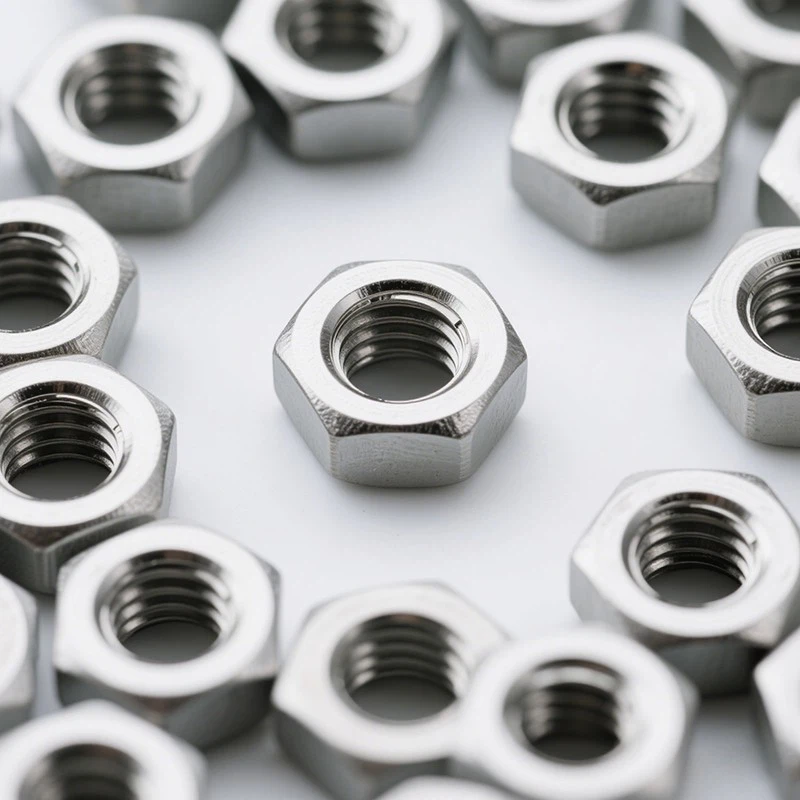
While aesthetics might not be the most important factor in some applications, they can still matter. A hexagon cap nut with a smooth, uniform surface looks more professional and polished than one with a rough, uneven surface. This can be important in applications where the nuts are visible, such as in furniture or architectural hardware.
Measuring Surface Roughness
So, how do we measure the surface roughness of a hexagon cap nut? There are a few different methods, but one of the most common is using a profilometer. A profilometer is a device that measures the height variations of a surface by tracing a stylus across it. The stylus moves along the surface, and the device records the vertical movements of the stylus. This data is then used to calculate the surface roughness parameters.
The most commonly used surface roughness parameter is Ra, which stands for arithmetic average roughness. Ra is the average of the absolute values of the height deviations from the mean line of the surface profile. In simpler terms, it gives you an idea of how rough or smooth the surface is on average.
Another parameter that is sometimes used is Rz, which stands for ten - point height of irregularities. Rz measures the average difference between the five highest peaks and the five lowest valleys in a sampling length of the surface profile.
Controlling Surface Roughness in Hexagon Cap Nut Manufacturing
As a supplier of hexagon cap nuts, we take great care to control the surface roughness during the manufacturing process. There are several steps that we can take to achieve the desired surface roughness.
1. Machining Processes
The machining processes used to manufacture the hexagon cap nuts play a big role in determining the surface roughness. For example, turning, milling, and threading operations can all affect the surface finish. By using high - quality cutting tools and optimizing the machining parameters, such as cutting speed, feed rate, and depth of cut, we can achieve a smoother surface finish.
2. Finishing Operations
After the initial machining, we often perform finishing operations to further improve the surface roughness. This can include processes like grinding, polishing, or buffing. These operations can remove any remaining surface irregularities and give the nut a smooth, uniform surface.
3. Quality Control
We also have a strict quality control system in place to ensure that the surface roughness of our hexagon cap nuts meets the required standards. We regularly measure the surface roughness using profilometers and other testing equipment to make sure that the nuts are within the specified tolerance range.
Different Applications and Surface Roughness Requirements
The surface roughness requirements for hexagon cap nuts can vary depending on the application.
1. Automotive Industry
In the automotive industry, hexagon cap nuts are used in a wide variety of applications, from engine components to suspension systems. In these applications, the nuts need to have a relatively smooth surface to ensure a proper fit and to prevent loosening due to vibration. A typical Ra value for automotive hexagon cap nuts might be in the range of 0.8 to 3.2 micrometers.
2. Construction Industry
In the construction industry, hexagon cap nuts are used in structural applications, such as connecting steel beams and columns. Here, the nuts need to have good corrosion resistance and a surface roughness that allows for a secure connection. A slightly rougher surface might be acceptable in these applications, as long as it doesn't affect the fit or the performance of the nut. A typical Ra value for construction hexagon cap nuts might be in the range of 3.2 to 6.3 micrometers.
3. Electronics Industry
In the electronics industry, hexagon cap nuts are used in applications where precision and aesthetics are important. For example, in electronic enclosures or circuit boards, the nuts need to have a smooth, clean surface to ensure a professional look and to prevent any debris from interfering with the electronic components. A very smooth surface with an Ra value of less than 0.8 micrometers might be required in these applications.
Related Products
If you're interested in hexagon cap nuts, you might also be interested in our other products, such as Hex Bolt Nut, Long Hex Nut, and Metric Nuts. These products are also manufactured with high - quality materials and strict quality control to ensure the best performance.
Conclusion
In conclusion, the surface roughness of a hexagon cap nut is an important factor that can affect its fit, function, corrosion resistance, and aesthetics. As a supplier, we understand the importance of controlling the surface roughness during the manufacturing process to meet the specific requirements of different applications.
If you're in the market for hexagon cap nuts or any of our other products, we'd love to hear from you. Whether you have questions about surface roughness, need a custom order, or just want to discuss your requirements, feel free to reach out to us. We're here to provide you with the best products and services to meet your needs.
References
- "Manufacturing Engineering and Technology" by Serope Kalpakjian and Steven R. Schmid
- "Mechanical Design Handbook" by Myer Kutz