

Hey there! As a supplier of hex nuts, I often get asked about the standard thread pitch for these little but crucial fasteners. So, I thought I'd sit down and write this blog to clear up any confusion and share some insights.
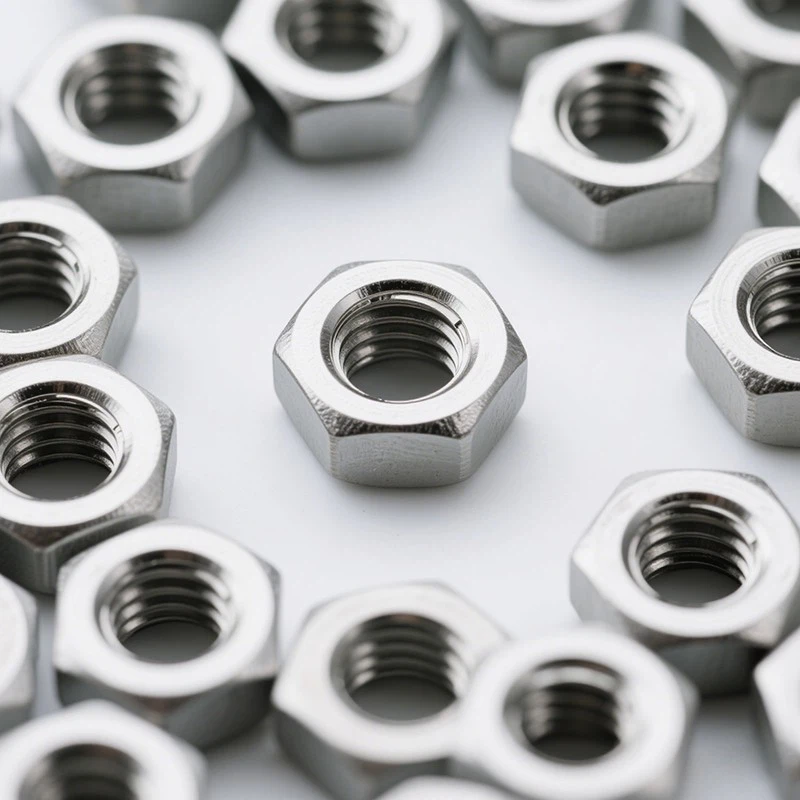
First off, let's talk a bit about what hex nuts are. Hex nuts are six - sided nuts that are used in a wide range of applications, from construction to automotive and machinery. They're designed to be used with bolts or screws to hold parts together securely. You can check out our Hex Nut products for a better idea of what I'm talking about.
Now, onto the main topic - thread pitch. Thread pitch is the distance between adjacent threads on a screw or a nut. It's a pretty important factor because it determines how well the nut will fit onto a bolt and how tight the connection will be.
There are two main systems when it comes to thread pitch: the metric system and the imperial system.
Metric Thread Pitch
In the metric system, thread pitch is measured in millimeters. Metric nuts are widely used around the world, especially in industries where precision is key. You can find a great selection of Metric Nuts on our website.
The standard metric thread pitches follow a specific pattern. For example, for smaller metric bolts and nuts (like M3, M4, M5), the thread pitches are relatively fine. An M3 nut typically has a thread pitch of 0.5mm, an M4 has a pitch of 0.7mm, and an M5 has a pitch of 0.8mm. As the size of the nut increases, the thread pitch also gets larger. An M10 nut usually has a thread pitch of 1.5mm, and an M12 nut has a pitch of 1.75mm.
The reason for these different thread pitches is to balance strength and ease of installation. Fine - pitched threads provide more holding power because there are more threads in contact with the bolt, which means a tighter connection. However, they can be a bit more difficult to install, especially if the parts are dirty or misaligned. Coarse - pitched threads, on the other hand, are easier and quicker to install, but they may not provide as much holding power as fine - pitched ones.
Imperial Thread Pitch
The imperial system, which is mainly used in the United States, measures thread pitch in threads per inch (TPI). This means that the thread pitch is determined by counting the number of threads in one inch of the bolt or nut.
For imperial hex nuts, the standard thread pitches also vary depending on the size. For example, a 1/4 - 20 nut has a diameter of 1/4 inch and 20 threads per inch. The "20" here indicates the thread pitch. A 3/8 - 16 nut has a 3/8 - inch diameter and 16 threads per inch.
Just like in the metric system, fine - pitched imperial threads (more TPI) offer better holding strength but can be more challenging to install. Coarse - pitched imperial threads (fewer TPI) are easier to work with but may not be as strong in some applications.
Why Does Thread Pitch Matter?
You might be wondering why all this talk about thread pitch is so important. Well, getting the right thread pitch is crucial for a few reasons.
Firstly, if the thread pitch of the nut doesn't match the thread pitch of the bolt, the two won't fit together properly. This can lead to a loose connection, which is a big no - no in most applications. A loose connection can cause parts to vibrate, which may eventually lead to failure of the entire assembly.
Secondly, the right thread pitch affects the strength of the joint. As I mentioned earlier, fine - pitched threads can provide more holding power, which is essential in applications where there's a lot of stress or vibration. For example, in automotive engines or heavy machinery, using the correct thread pitch can prevent parts from coming loose and causing serious damage.
Choosing the Right Hex Nut
When you're choosing a hex nut, it's important to consider the thread pitch along with other factors like the size, material, and finish.
Size is pretty straightforward - you need to make sure the nut has the right diameter to fit the bolt. Material is also crucial. Hex nuts can be made from various materials such as steel, stainless steel, brass, and nylon. Steel nuts are strong and durable, but they may rust if not properly coated. Stainless steel nuts are corrosion - resistant, making them a great choice for outdoor or wet environments. Brass nuts are often used in electrical applications because of their good conductivity, and nylon nuts are used for their vibration - dampening properties.
The finish of the nut can also affect its performance. For example, a zinc - plated finish can provide some corrosion resistance, while a black oxide finish can give the nut a more aesthetically pleasing look.

If you're still not sure which hex nut is right for your application, our team of experts is here to help. We've been in the business for a long time, and we know a thing or two about hex nuts. Whether you need a Hex Head Barrel Nut for a specific project or just a regular hex nut, we can guide you through the selection process.
Contact Us for Your Hex Nut Needs
If you're in the market for high - quality hex nuts, look no further. We're committed to providing our customers with the best products at competitive prices. Whether you're a small DIY enthusiast or a large industrial manufacturer, we have the hex nuts you need.
Don't hesitate to reach out to us if you have any questions or if you're ready to place an order. We'll be more than happy to discuss your requirements and help you find the perfect hex nuts for your project.
References
- Machinery's Handbook, 31st Edition
- Fastener Standards and Specifications by various industry associations