

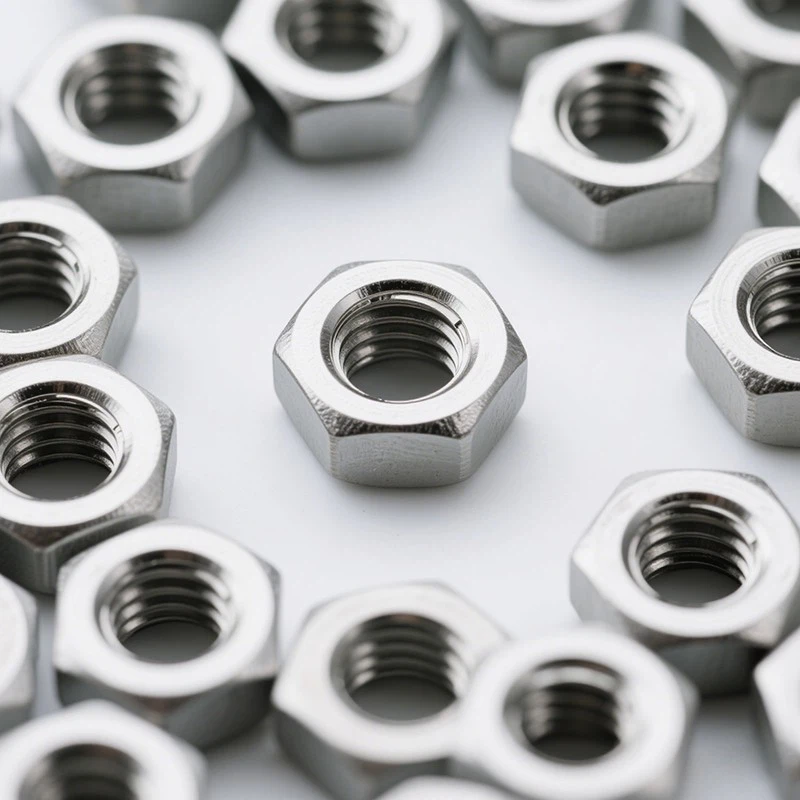
Hey there! As a supplier of Stainless Steel Nuts, I've seen my fair share of issues with galling, and I know how frustrating it can be. Galling is a form of wear that occurs when two metal surfaces stick together and then tear apart, leaving behind rough and damaged areas. In stainless steel nuts, this can lead to seizure, where the nut becomes impossible to remove without damaging the bolt or the nut itself. But don't worry, I'm here to share some tips on how you can prevent galling in stainless steel nuts.

Understanding the Causes of Galling
Before we dive into the prevention methods, it's important to understand what causes galling in the first place. Galling typically happens when there's high friction between two stainless steel surfaces. Stainless steel has a relatively low thermal conductivity, which means that when pressure and friction are applied, the heat generated doesn't dissipate quickly. This causes the surfaces to soften and stick together.
Another factor is the surface finish. Rough or uneven surfaces increase the contact points between the nut and the bolt, leading to more friction and a higher likelihood of galling. Also, improper installation, such as over - tightening or using the wrong tools, can exacerbate the problem.
Choose the Right Grade of Stainless Steel
Not all stainless steels are created equal when it comes to galling resistance. Some grades are more prone to galling than others. For example, austenitic stainless steels like 304 and 316 are commonly used for nuts, but they can be susceptible to galling. On the other hand, duplex stainless steels offer better galling resistance due to their two - phase microstructure.
If you're in the market for high - performance nuts, consider duplex stainless steel options. You can check out our Stainless Steel Nut range, where we offer a variety of grades to suit different applications.
Proper Surface Finish
A smooth surface finish is crucial for reducing friction and preventing galling. When manufacturing stainless steel nuts, we use precision machining techniques to ensure that the threads are smooth and free of burrs. A polished surface reduces the contact area between the nut and the bolt, minimizing the chances of galling.
We also offer nuts with special coatings that can further enhance the surface properties. For instance, a PTFE (polytetrafluoroethylene) coating can act as a lubricant, reducing friction and providing an additional layer of protection against galling.
Lubrication
Lubrication is one of the most effective ways to prevent galling. By applying a lubricant between the nut and the bolt, you can reduce friction and heat generation. There are several types of lubricants that you can use, such as anti - seize compounds, graphite - based lubricants, and even some types of oils.
When using a lubricant, make sure to apply it evenly on the threads of both the nut and the bolt. This will ensure that the lubricant can do its job effectively. Just a little bit of lubricant can go a long way in preventing galling and extending the life of your stainless steel nuts.
Correct Installation Techniques
Proper installation is key to preventing galling. First of all, make sure that you're using the right tools. Using a torque wrench is highly recommended, as it allows you to tighten the nut to the correct torque specification. Over - tightening can cause excessive pressure and friction, leading to galling.
Also, start the nut onto the bolt by hand to ensure that the threads are properly aligned. If the threads are cross - threaded, it can cause damage and increase the likelihood of galling. Once the nut is hand - tightened, use the torque wrench to gradually tighten it to the recommended torque.
Use Locking Nuts or Washers
In some applications, using locking nuts or washers can help prevent galling. Locking nuts, such as nylon - insert lock nuts or prevailing - torque lock nuts, provide additional resistance to loosening. This can reduce the amount of movement between the nut and the bolt, which in turn reduces friction and the risk of galling.
Washers can also play a role in preventing galling. A flat washer can distribute the load evenly, reducing the pressure on the threads. A spring washer can provide a constant tension, helping to keep the nut in place and reducing movement.
Consider the Application Environment
The environment in which the stainless steel nuts are used can also affect the likelihood of galling. For example, in high - temperature or high - humidity environments, the risk of galling may be higher. In such cases, you may need to take additional precautions.
If the application involves exposure to chemicals or corrosive substances, make sure to choose a stainless steel grade that is resistant to corrosion. This will help maintain the integrity of the nut and reduce the chances of galling.
Our Product Range
As a Stainless Steel Nut supplier, we offer a wide range of products to meet your needs. Our Hex Bolt Nut selection includes various sizes and grades, suitable for different applications. Whether you need nuts for construction, automotive, or industrial use, we've got you covered.
We also have a great selection of Metric Nuts. These nuts are manufactured to strict quality standards, ensuring that they offer excellent performance and reliability.
Conclusion
Preventing galling in stainless steel nuts is all about taking the right precautions. By choosing the right grade of stainless steel, ensuring a proper surface finish, using lubrication, following correct installation techniques, and considering the application environment, you can significantly reduce the risk of galling.
If you're looking for high - quality stainless steel nuts that are resistant to galling, look no further. We're here to provide you with the best products and solutions. Whether you have a small project or a large - scale industrial application, we can help you find the right nuts for the job.
If you're interested in our products or have any questions about preventing galling in stainless steel nuts, feel free to reach out. We're always happy to have a chat and discuss your specific requirements. Let's work together to ensure that your projects run smoothly and your stainless steel nuts perform at their best.
References
- ASM Handbook, Volume 11: Failure Analysis and Prevention. ASM International.
- Machinery's Handbook, 31st Edition. Industrial Press Inc.
- Stainless Steel Design Manual. The Nickel Institute.