Product Introduction
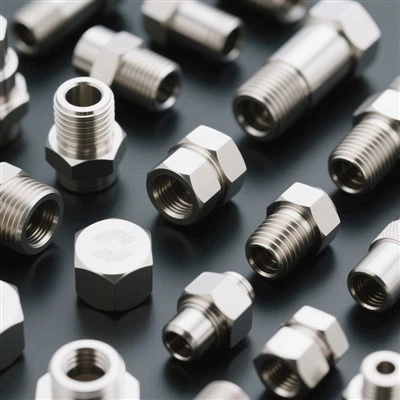
A stainless steel nut is a crucial fastener widely used in various industries. Made from stainless steel alloys, it offers excellent corrosion resistance, making it suitable for both indoor and outdoor applications where exposure to moisture, chemicals, or harsh environments is common.
Stainless steel nuts come in different types, such as hex nuts, lock nuts, and wing nuts, each designed for specific purposes. Hex nuts are the most common, featuring a six-sided shape that allows for easy tightening and loosening with wrenches or sockets. Lock nuts prevent loosening due to vibrations, ensuring the stability of assembled components. Wing nuts, with their wing-like projections, can be manually tightened and loosened without tools, providing convenience in some situations.
These nuts have high strength and durability, capable of withstanding significant mechanical loads. Their smooth surface finish not only enhances their aesthetic appeal but also reduces friction during installation. Stainless steel nuts play an essential role in industries like construction, automotive, aerospace, and machinery, contributing to the reliability and longevity of structures and equipment.
Product advantages and features
Corrosion Resistance: Stainless steel nuts are renowned for their exceptional resistance to corrosion. The presence of chromium in stainless steel forms a thin, invisible, and self-healing oxide layer on the surface, which protects the metal from the harmful effects of moisture, chemicals, and other corrosive agents. This makes them ideal for use in harsh environments such as marine applications, chemical processing plants, and outdoor structures.
Strength and Durability: They offer high strength and durability. Stainless steel has good mechanical properties, including tensile strength and hardness, which allows the nuts to withstand heavy loads and vibrations without deforming or breaking easily. This ensures a reliable and long-lasting connection in various applications.
Hygiene and Cleanliness: Stainless steel is non-porous and easy to clean, making it suitable for applications where hygiene is of utmost importance, such as in the food and beverage industry, pharmaceutical manufacturing, and medical equipment. The smooth surface of the nuts prevents the accumulation of dirt, bacteria, and other contaminants.
Aesthetic Appeal: With their shiny and polished appearance, stainless steel nuts can enhance the visual appeal of a product or structure. They are often used in architectural and decorative applications where a high-quality and attractive finish is desired.
Heat Resistance: Stainless steel can withstand high temperatures without losing its mechanical properties. This makes stainless steel nuts suitable for use in applications where exposure to heat is common, such as in automotive engines, industrial furnaces, and exhaust systems.
Product Type
Hex Nuts: This is the most common type of stainless steel nut. It has a hexagonal shape, which allows it to be easily tightened and loosened using a wrench or socket. Hex nuts come in various sizes and grades, and they are widely used in general engineering, construction, and machinery applications.
Flange Nuts: Flange nuts have a wide, flat base that provides a larger bearing surface and helps to distribute the load more evenly. This reduces the risk of the nut loosening due to vibration. Flange nuts are commonly used in automotive applications, as well as in applications where a secure and stable connection is required.
Lock Nuts: Lock nuts are designed to prevent loosening due to vibration or rotation. They come in different types, such as nylon insert lock nuts, all-metal lock nuts, and prevailing torque lock nuts. Nylon insert lock nuts have a nylon ring inserted into the nut, which provides friction and prevents the nut from backing off. All-metal lock nuts use a special design or coating to create a locking effect.
Cap Nuts: Cap nuts, also known as dome nuts, have a rounded top that covers the end of the bolt or screw, providing a more aesthetically pleasing appearance. They are often used in applications where the exposed end of the fastener needs to be protected or concealed.
Wing Nuts: Wing nuts have two wings or lugs that allow them to be tightened and loosened by hand, without the need for tools. They are commonly used in applications where quick and easy adjustments are required, such as in plumbing, electrical work, and furniture assembly.
Product Application
Automotive Industry: Stainless steel nuts are widely used in the automotive industry for various applications, including engine components, suspension systems, exhaust systems, and bodywork. Their corrosion resistance and strength make them suitable for withstanding the harsh operating conditions of vehicles.
Marine Industry: In the marine environment, where saltwater and moisture can cause rapid corrosion, stainless steel nuts are the preferred choice for securing components on boats, ships, and offshore structures. They are used in applications such as hull fittings, rigging, and marine hardware.
Construction Industry: Stainless steel nuts are used in construction applications for their durability and resistance to weathering. They are used in structural connections, roofing systems, and architectural features. In addition, their aesthetic appeal makes them suitable for use in high-end buildings and public spaces.
Food and Beverage Industry: As mentioned earlier, stainless steel nuts are ideal for use in the food and beverage industry due to their hygiene and cleanliness. They are used in equipment such as mixers, conveyors, and processing machinery, where contact with food products is common.
Medical and Pharmaceutical Industry: Stainless steel nuts are used in medical and pharmaceutical equipment for their corrosion resistance and biocompatibility. They are used in applications such as surgical instruments, implants, and pharmaceutical manufacturing equipment.
Product material
The most common types of stainless steel used for nuts are austenitic stainless steels, such as 304 and 316.
1.Type 304 Stainless Steel: It contains approximately 18% chromium and 8% nickel, which gives it good corrosion resistance and mechanical properties. Type 304 is the most widely used stainless steel grade for nuts and is suitable for a wide range of applications.
2.Type 316 Stainless Steel: This grade contains additional molybdenum, which provides enhanced corrosion resistance, especially in harsh environments such as marine and chemical applications. Type 316 is often used in applications where higher levels of corrosion resistance are required compared to type 304.
In addition to austenitic stainless steels, other types of stainless steel, such as ferritic and martensitic stainless steels, may also be used for specific applications depending on the required properties and performance.
FAQ
Hot Tags: stainless steel nut, China stainless steel nut manufacturers, suppliers, factory, Barrel Nut, Hex Bolt Nut, Hex Nut Screw, Long Hex Nut, Metric Nuts, Stainless Steel Nut