

In the complex world of hydraulic systems, the response time of a hydraulic adapter plays a crucial role in determining the overall efficiency and performance of the system. As a leading supplier of hydraulic adapters, I have witnessed firsthand the impact that a well - functioning adapter can have on various industrial applications. In this blog, we will delve into the concept of the response time of a hydraulic adapter, its influencing factors, and its significance in a hydraulic system.
Understanding the Response Time of a Hydraulic Adapter
The response time of a hydraulic adapter refers to the time it takes for the adapter to transmit hydraulic pressure and flow changes from one part of the system to another. In a hydraulic system, fluid is used to transfer power. When there is a change in pressure or flow rate at the input of the adapter, the adapter needs to quickly and accurately convey this change to the output. For example, in a hydraulic cylinder - based system, when the control valve sends a signal to increase the pressure to extend the cylinder, the hydraulic adapter connecting the valve to the cylinder must rapidly transfer this pressure change.
Factors Affecting the Response Time
1. Internal Volume
The internal volume of a hydraulic adapter is one of the primary factors influencing its response time. A larger internal volume means that more hydraulic fluid needs to be displaced when there is a pressure or flow change. This can lead to a delay in the transmission of the change, as the fluid takes time to move through the adapter. For instance, if we compare two adapters, one with a large - bore design and the other with a small - bore design, the adapter with the smaller bore (less internal volume) will generally have a faster response time.
2. Material and Design
The material and design of the hydraulic adapter also have a significant impact on its response time. Adapters made from high - quality materials with good mechanical properties can withstand rapid pressure changes without deforming. This ensures that the internal passage of the adapter remains consistent, allowing for smooth and quick fluid flow. Additionally, a well - designed adapter with a streamlined internal geometry reduces flow resistance. For example, an adapter with a straight - through design will have less flow resistance compared to an adapter with multiple bends or a complex internal structure, resulting in a faster response time.
3. Viscosity of the Hydraulic Fluid
The viscosity of the hydraulic fluid used in the system is another important factor. Higher - viscosity fluids are thicker and more resistant to flow. When using a high - viscosity fluid, the adapter will take longer to transmit pressure and flow changes because the fluid moves more slowly through the adapter. On the other hand, lower - viscosity fluids flow more easily, enabling a faster response time. However, it's important to note that the choice of fluid viscosity also depends on other factors such as the operating temperature and the requirements of the hydraulic system.
Significance of Response Time in a Hydraulic System
1. Precision and Accuracy
In applications where precision is crucial, such as in aerospace or robotics, the response time of the hydraulic adapter can directly affect the accuracy of the system. For example, in a robotic arm powered by a hydraulic system, a fast - responding adapter ensures that the arm can move quickly and precisely to the desired position. Any delay in the response of the adapter can lead to overshooting or undershooting of the target position, reducing the overall accuracy of the robotic operation.

2. System Efficiency
A hydraulic system with a fast - responding adapter operates more efficiently. When the adapter can quickly transmit pressure and flow changes, the system can respond rapidly to changes in load or operating conditions. This reduces energy losses and improves the overall performance of the system. For example, in a hydraulic press, a fast - responding adapter allows the press to quickly apply the required force, reducing the cycle time and increasing the productivity of the press.
3. Safety
In some hydraulic systems, such as those used in heavy machinery or construction equipment, safety is of utmost importance. A fast - responding adapter can help prevent dangerous situations. For instance, in a hydraulic braking system, a quick - acting adapter ensures that the braking force is applied immediately when the brake pedal is pressed. Any delay in the response of the adapter could lead to a longer stopping distance, increasing the risk of accidents.
Our Hydraulic Adapter Solutions
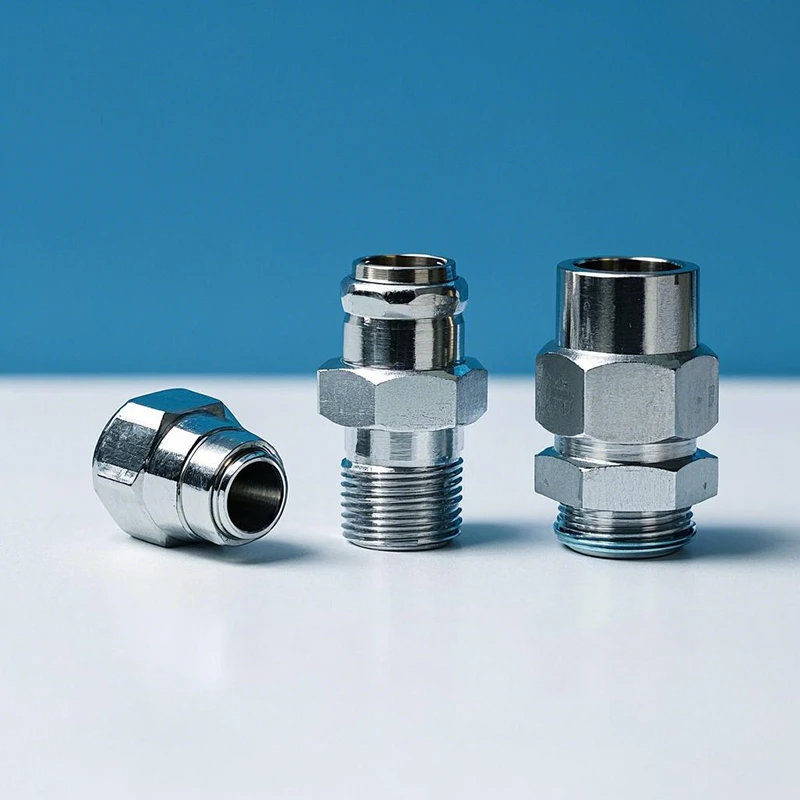
As a hydraulic adapter supplier, we offer a wide range of products designed to meet the diverse needs of our customers. Our Hydraulic Swivel Connector is engineered with a low - internal - volume design and high - quality materials, ensuring a fast response time. It allows for smooth rotation while transmitting hydraulic power, making it ideal for applications where flexibility is required.
Our Adapter Hydraulic Hose Fittings are designed with a streamlined internal geometry to minimize flow resistance. This results in a faster response time and improved system performance. These fittings are available in various sizes and configurations to fit different hydraulic hoses and systems.
We also provide Thread Nuts that are made from high - strength materials. These nuts ensure a secure connection between the adapter and other components in the hydraulic system, preventing any leakage or pressure loss that could affect the response time.
Contact Us for Procurement and Discussion
If you are in need of high - performance hydraulic adapters with fast response times, we are here to help. Our team of experts can provide you with detailed technical information and guidance on choosing the right adapter for your specific application. Whether you are involved in manufacturing, construction, or any other industry that relies on hydraulic systems, we can offer customized solutions to meet your requirements. Contact us today to start a discussion about your procurement needs and how our hydraulic adapters can enhance the performance of your system.
References
- "Hydraulic Systems and Components" by John F. Dorgan
- "Fluid Power Engineering" by Anthony Esposito