

The modulus of elasticity, also known as Young's modulus, is a fundamental property in materials science and engineering. It measures the stiffness of a material, representing the ratio of stress to strain within the elastic deformation range of the material. For thread nuts, understanding their modulus of elasticity is crucial for ensuring their performance and reliability in various applications. As a leading thread nuts supplier, we are deeply aware of the significance of this property and its impact on the quality of our products.
Understanding the Modulus of Elasticity
The modulus of elasticity is defined by the formula (E=\frac{\sigma}{\epsilon}), where (E) is the modulus of elasticity, (\sigma) is the stress applied to the material, and (\epsilon) is the resulting strain. Stress is the force per unit area ((\sigma=\frac{F}{A}), where (F) is the force and (A) is the cross - sectional area), and strain is the relative deformation of the material ((\epsilon=\frac{\Delta L}{L_0}), where (\Delta L) is the change in length and (L_0) is the original length).
In the context of thread nuts, a high modulus of elasticity means that the nut will deform less under a given load. This is important because in applications where precise fastening is required, excessive deformation can lead to loosening of the connection over time, compromising the integrity of the assembly. For example, in automotive engines, thread nuts with appropriate modulus of elasticity are essential to maintain the tightness of critical components, preventing leaks and mechanical failures.
Factors Affecting the Modulus of Elasticity of Thread Nuts
Material Composition
The material from which the thread nut is made is the primary factor influencing its modulus of elasticity. Common materials for thread nuts include steel, brass, and aluminum. Steel typically has a relatively high modulus of elasticity, around 200 GPa (gigapascals). This high value makes steel nuts suitable for applications where high strength and stiffness are required, such as in heavy machinery and structural engineering.
Brass, on the other hand, has a lower modulus of elasticity, approximately 90 - 110 GPa. Brass nuts are often used in applications where corrosion resistance and good electrical conductivity are important, such as in electrical installations. Aluminum nuts have an even lower modulus of elasticity, around 70 GPa. They are favored for their lightweight properties, making them ideal for aerospace and automotive applications where weight reduction is a priority.
Manufacturing Process
The manufacturing process can also affect the modulus of elasticity of thread nuts. Processes such as cold forging and heat treatment can alter the internal structure of the material, thereby influencing its mechanical properties. Cold forging can increase the density and alignment of the material grains, which may slightly increase the modulus of elasticity. Heat treatment, such as annealing or quenching, can change the hardness and ductility of the material, which in turn can affect its modulus of elasticity.
Thread Design
The design of the thread on the nut can also have an impact on its effective modulus of elasticity. A fine - pitched thread may distribute the load more evenly compared to a coarse - pitched thread, resulting in different stress and strain distributions within the nut. Additionally, the shape and profile of the thread, such as the angle and depth, can affect how the nut interacts with the mating bolt, influencing the overall stiffness of the connection.
Importance of Modulus of Elasticity in Different Applications
Industrial Machinery
In industrial machinery, thread nuts are used to fasten various components together. A nut with the appropriate modulus of elasticity is essential to ensure that the connection remains stable under the dynamic loads and vibrations experienced during operation. For example, in a large - scale manufacturing plant, thread nuts on conveyor belts need to have sufficient stiffness to prevent loosening, which could lead to costly downtime and maintenance.
Aerospace Industry
The aerospace industry places extremely high demands on the performance of thread nuts. In aircraft, every component must be lightweight yet strong enough to withstand the extreme forces encountered during flight. Thread nuts with a well - balanced modulus of elasticity are crucial for ensuring the safety and reliability of the aircraft's structure. For instance, in the wing assembly, thread nuts are used to fasten critical components such as control surfaces. A nut with the wrong modulus of elasticity could lead to structural failures, endangering the lives of passengers and crew.
Automotive Industry
In the automotive industry, thread nuts are used in a wide range of applications, from engine components to suspension systems. In the engine, nuts with high modulus of elasticity are used to secure the cylinder head, ensuring a tight seal and preventing coolant and oil leaks. In the suspension system, nuts with appropriate stiffness are necessary to maintain the alignment and stability of the vehicle, providing a smooth and safe driving experience.
Our Offerings as a Thread Nuts Supplier
As a professional thread nuts supplier, we offer a wide range of thread nuts made from different materials to meet the diverse needs of our customers. Our steel thread nuts are manufactured using high - quality steel alloys, ensuring high strength and a high modulus of elasticity. These nuts are suitable for heavy - duty applications where maximum stiffness is required.

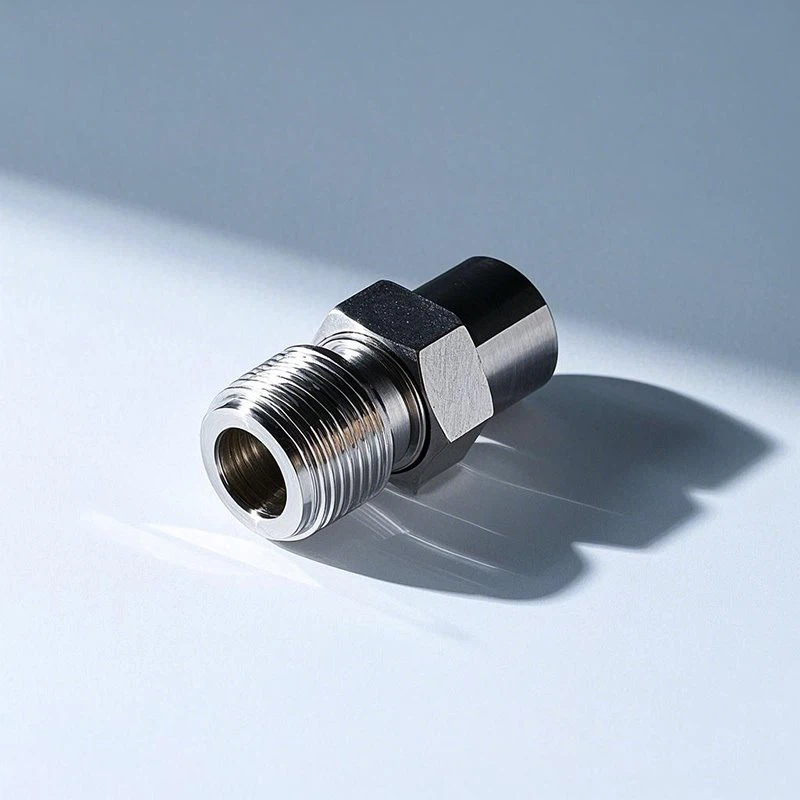
Our brass and aluminum thread nuts are also available, providing options for applications where corrosion resistance, electrical conductivity, or lightweight properties are important. We use advanced manufacturing processes to ensure the consistency and quality of our products. Our cold - forging process helps to improve the internal structure of the nuts, enhancing their mechanical properties.
In addition to our standard thread nuts, we also offer custom - made solutions. We understand that different applications may have unique requirements, and our team of engineers is ready to work with you to develop thread nuts with specific modulus of elasticity values to meet your exact specifications.
Related Products and Their Importance
We also supply a variety of related products that complement our thread nuts. For example, our Hydraulic Swivel Connector is an essential component in hydraulic systems. It allows for smooth rotation and connection of hydraulic hoses, ensuring efficient fluid transfer. The proper selection of hydraulic swivel connectors, along with appropriate thread nuts, is crucial for the reliable operation of hydraulic systems in industries such as construction and agriculture.
Our Metric To JIC Adapter is another important product. It enables the connection between metric and JIC (Joint Industry Council) hydraulic components, providing flexibility in hydraulic system design. This adapter, when used in conjunction with our high - quality thread nuts, helps to create secure and leak - free hydraulic connections.
Furthermore, our Adapter Hydraulic Hose Fittings are designed to connect hydraulic hoses to various components. These fittings, combined with our thread nuts, ensure a tight and reliable connection, preventing hydraulic fluid leaks and maintaining the performance of the hydraulic system.
Contact Us for Your Thread Nuts Needs
If you are in need of high - quality thread nuts or related products, we invite you to contact us for a detailed discussion. Our team of experts is ready to assist you in selecting the right products based on your specific application requirements. Whether you need thread nuts with a specific modulus of elasticity or custom - made solutions, we have the expertise and resources to meet your needs.
References
- Callister, W. D., & Rethwisch, D. G. (2014). Materials Science and Engineering: An Introduction. Wiley.
- Ashby, M. F., & Jones, D. R. H. (2012). Engineering Materials 1: An Introduction to Properties, Applications and Design. Butterworth - Heinemann.
- Budynas, R. G., & Nisbett, J. K. (2011). Shigley's Mechanical Engineering Design. McGraw - Hill.