

Hey there! As a supplier of Hex Head Barrel Nuts, I often get asked about what these little guys are made of. So, let's dive right into the chemical composition of hex head barrel nuts.
Basic Metals Used
Most hex head barrel nuts are made from metals, and the choice of metal depends on several factors like the application, required strength, and corrosion resistance.
Steel
Steel is hands - down the most common material for hex head barrel nuts. It's an alloy mainly composed of iron (Fe) and carbon (C). The amount of carbon in steel can vary, and this variation affects its properties.
- Low - carbon steel: This type of steel typically contains less than 0.3% carbon. It's relatively soft and easy to machine, which makes it a cost - effective choice for general - purpose hex head barrel nuts. For example, in furniture assembly, where the nuts don't need to withstand extremely high loads, low - carbon steel nuts work just fine.
- Medium - carbon steel: With a carbon content ranging from 0.3% to 0.6%, medium - carbon steel is stronger than low - carbon steel. It has better wear resistance and can handle higher stress levels. Nuts made from medium - carbon steel are often used in machinery and automotive applications.
- High - carbon steel: Containing more than 0.6% carbon, high - carbon steel is very hard and strong. However, it's also more brittle. High - carbon steel hex head barrel nuts are used in applications where high strength and hardness are crucial, like in heavy - duty construction equipment.
In addition to iron and carbon, steel may also contain small amounts of other elements. Manganese (Mn) is often added to improve the strength and hardenability of the steel. Silicon (Si) helps in deoxidizing the steel during the manufacturing process. Phosphorus (P) and sulfur (S) are usually considered impurities, and their levels are kept low because they can reduce the ductility and toughness of the steel.
Stainless Steel
Stainless steel is another popular choice for hex head barrel nuts, especially when corrosion resistance is a must. Stainless steel contains at least 10.5% chromium (Cr). Chromium forms a thin, passive oxide layer on the surface of the steel, which protects it from rust and corrosion.
- Austenitic stainless steel: This is the most common type of stainless steel used for nuts. It contains nickel (Ni) in addition to chromium. Austenitic stainless steel is non - magnetic, has good formability, and excellent corrosion resistance. Nuts made from austenitic stainless steel are widely used in marine applications, food processing equipment, and architectural structures. For instance, in a coastal building, austenitic stainless steel hex head barrel nuts won't rust even when exposed to saltwater and humid air.
- Ferritic stainless steel: Ferritic stainless steel has a lower nickel content compared to austenitic stainless steel. It's magnetic and has good resistance to stress - corrosion cracking. Ferritic stainless steel nuts are used in applications where cost is a concern and moderate corrosion resistance is required, such as in some automotive exhaust systems.
- Martensitic stainless steel: Martensitic stainless steel is hard and strong but has relatively lower corrosion resistance compared to austenitic and ferritic stainless steels. It's often used in applications where high strength and wear resistance are needed, like in some cutting tools and certain mechanical components.
Brass
Brass is an alloy of copper (Cu) and zinc (Zn). The proportion of copper and zinc can vary, which gives brass different properties.
- Yellow brass: This type of brass contains around 67% copper and 33% zinc. It has good corrosion resistance, is easy to machine, and has an attractive golden - yellow color. Yellow brass hex head barrel nuts are often used in decorative applications, like in furniture and lighting fixtures.
- Red brass: Red brass has a higher copper content, usually around 85% copper and 15% zinc. It's more corrosion - resistant than yellow brass and has better thermal conductivity. Red brass nuts can be found in plumbing applications and some electrical equipment.
Surface Treatments and Their Chemicals
Sometimes, hex head barrel nuts undergo surface treatments to enhance their properties.
Galvanizing
Galvanizing is a process where a layer of zinc is applied to the surface of the nut. This provides excellent corrosion protection. The zinc layer acts as a sacrificial anode, meaning it corrodes before the underlying metal. The zinc reacts with oxygen and moisture in the air to form zinc oxide (ZnO) and zinc hydroxide (Zn(OH)₂), which further react with carbon dioxide in the air to form a protective layer of zinc carbonate (ZnCO₃). Galvanized nuts are commonly used in outdoor applications, like in fencing and construction.
Black Oxide Coating
Black oxide coating is a chemical conversion coating that forms a thin layer of iron oxide (Fe₃O₄) on the surface of steel nuts. This coating not only gives the nuts a black, aesthetically pleasing appearance but also provides some corrosion resistance and reduces light reflection. Black oxide - coated nuts are often used in military and aerospace applications, as well as in some high - end machinery.
Other Related Nuts
If you're interested in different types of nuts, we also have Capnuts, Metric Nuts, and Long Hex Nut. Each of these has its own unique features and applications.
Why Choose Our Hex Head Barrel Nuts
As a supplier, we take pride in providing high - quality hex head barrel nuts. We carefully select the materials based on the specific requirements of our customers. Whether you need nuts for a small DIY project or a large - scale industrial application, we've got you covered. Our nuts are made with precision and meet strict quality standards.

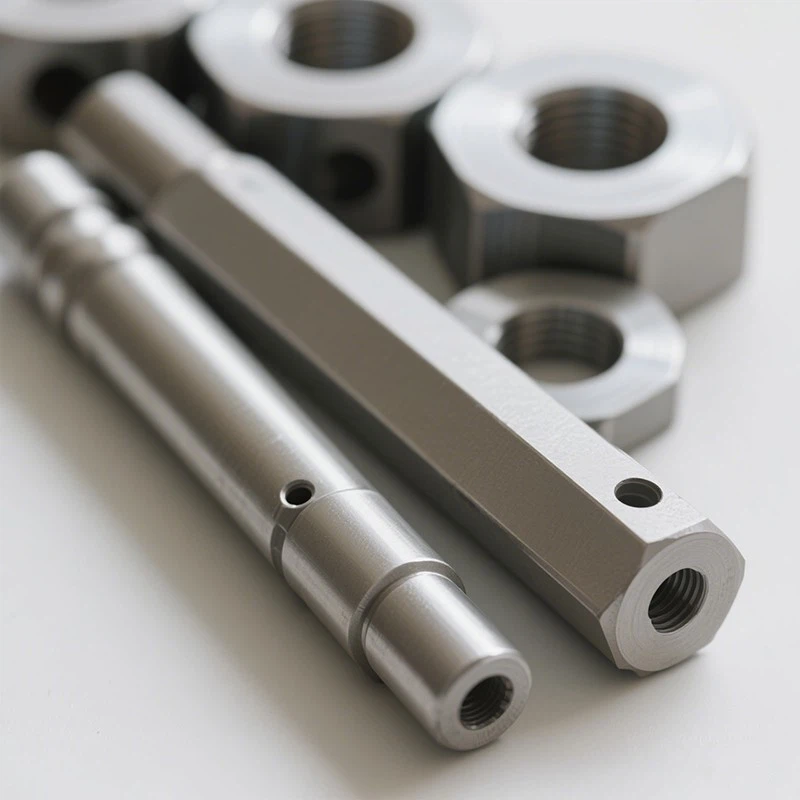
If you're in the market for hex head barrel nuts or any of our other nut products, don't hesitate to reach out. We're here to help you find the perfect nuts for your needs. Just contact us, and we can have a detailed discussion about your requirements and how we can provide the best solutions.
References
- ASM Handbook Volume 1: Properties and Selection: Irons, Steels, and High - Performance Alloys
- Metals Handbook Desk Edition, Third Edition
- Corrosion Basics: An Introduction by Mars G. Fontana