

Hey there! As a supplier of Metric Nuts, I've gotten a ton of questions about how these little guys perform in low-temperature environments. So, I thought I'd sit down and share what I know.
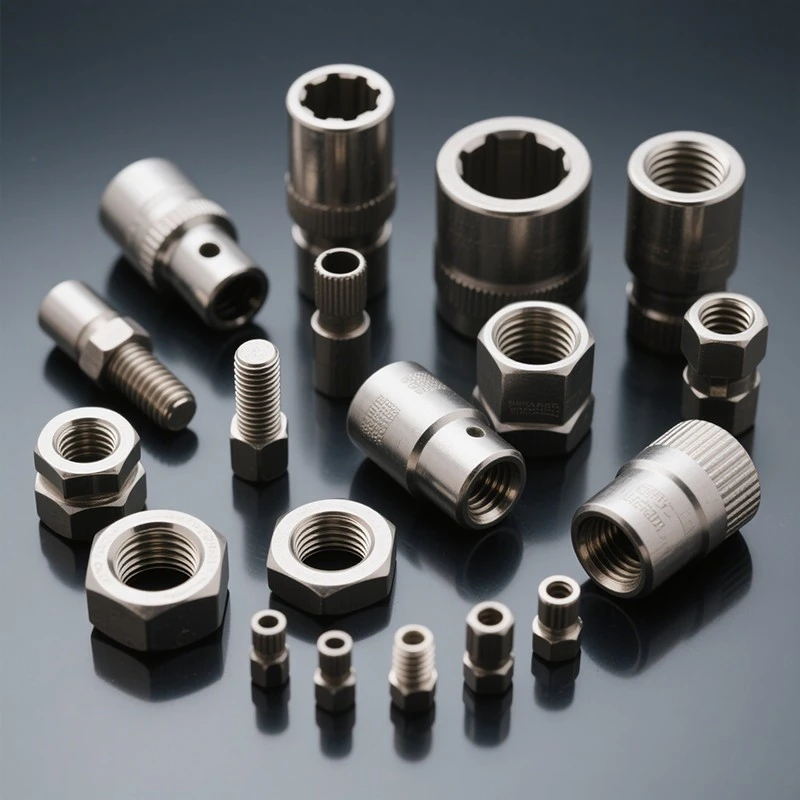
First off, let's talk about what metric nuts are. Metric nuts are fasteners that are used to secure bolts or threaded rods. They come in all sorts of shapes and sizes, from the common hex nuts to more specialized types like Capnuts and Barrel Nut. You can check out our full range of Metric Nuts on our website.
Now, when it comes to low-temperature environments, metric nuts face a few challenges. One of the main issues is the change in material properties. Most metals, which are commonly used to make metric nuts, become more brittle as the temperature drops. This means they're more likely to crack or break under stress.
For example, steel, a popular material for metric nuts, has a property called the ductile-to-brittle transition temperature (DBTT). Above this temperature, steel is ductile, which means it can deform under stress without breaking. But below the DBTT, it becomes brittle. If a metric nut made of steel is used in an environment where the temperature drops below its DBTT, it could fail unexpectedly.
Another issue is the contraction of materials. When the temperature drops, metals contract. This can cause problems if the bolt and nut are made of different materials with different coefficients of thermal expansion. The difference in contraction can lead to a loss of preload in the joint. Preload is the force that holds the bolt and nut together, and if it's lost, the joint can loosen, which can be a real safety hazard.
So, how can we deal with these issues? Well, one option is to choose the right material for the job. Some materials are more suitable for low-temperature environments than others. For instance, stainless steel, especially grades like 304 and 316, have good low-temperature toughness. They have a lower DBTT compared to some other steels, which means they stay ductile at lower temperatures.
Aluminum is also a good choice in some cases. It has a relatively high coefficient of thermal expansion, but it doesn't become as brittle as steel at low temperatures. However, aluminum nuts may not be as strong as steel nuts, so they're better suited for applications where the loads are not too high.
Coating is another way to improve the performance of metric nuts in low-temperature environments. A good coating can protect the nut from corrosion, which can be exacerbated in cold and wet conditions. It can also reduce friction, making it easier to tighten and loosen the nut.
Now, let's talk about some real-world applications. In industries like aerospace and refrigeration, metric nuts are used in low-temperature environments all the time. In aerospace, components are often exposed to extremely low temperatures at high altitudes. The metric nuts used in these applications need to be reliable to ensure the safety of the aircraft.
In the refrigeration industry, metric nuts are used to assemble cooling systems. These systems operate at low temperatures, and the nuts need to maintain their integrity to prevent leaks and ensure the proper functioning of the equipment.
In my experience as a Metric Nuts supplier, it's crucial to work closely with customers to understand their specific requirements. Every application is different, and the right choice of metric nuts depends on factors like the temperature range, the load, and the environment.
If you're in the market for metric nuts for a low-temperature application, don't hesitate to reach out. We've got a team of experts who can help you select the right nuts for your needs. Whether you need a small quantity for a prototype or a large order for a full-scale production, we're here to assist you.
We understand that getting the right fasteners is essential for the success of your project. That's why we offer a wide range of metric nuts, all of which are made to high-quality standards. We also provide technical support to ensure that you're using the nuts correctly and getting the best performance out of them.
So, if you're looking for reliable metric nuts for your low-temperature applications, give us a chance. We're confident that we can provide you with the products and services you need to get the job done right.

In conclusion, metric nuts can perform well in low-temperature environments if the right materials and design considerations are taken into account. By understanding the challenges and choosing the appropriate solutions, you can ensure that your joints are secure and reliable even in the coldest conditions.
If you have any questions or need more information, feel free to contact us. We're always happy to help you find the perfect metric nuts for your project.
References:
- ASM Handbook Volume 1: Properties and Selection: Irons, Steels, and High-Performance Alloys
- Machinery's Handbook, 31st Edition