

Do capnuts have a specific tolerance range?
As a capnuts supplier, I often encounter questions from customers regarding the tolerance range of capnuts. Tolerance is a critical aspect in the manufacturing and application of capnuts, as it directly impacts their functionality, compatibility, and overall performance. In this blog, we will delve into the topic of whether capnuts have a specific tolerance range, exploring the factors that influence it and the importance of adhering to these tolerances.
First, let's understand what tolerance means in the context of capnuts. Tolerance refers to the allowable variation in the dimensions, properties, or characteristics of a capnut from its specified nominal value. These variations can occur in various parameters such as diameter, pitch, height, and surface finish. The specific tolerance range for capnuts is determined by a combination of industry standards, application requirements, and manufacturing capabilities.
Industry standards play a significant role in defining the tolerance range for capnuts. Organizations such as the American National Standards Institute (ANSI), the International Organization for Standardization (ISO), and the Deutsches Institut für Normung (DIN) have established comprehensive standards for fasteners, including capnuts. These standards specify the dimensional tolerances, material requirements, and performance criteria for different types of capnuts. For example, ISO 4032 and ISO 4033 define the dimensional requirements for hexagon nuts, which are similar to capnuts in many aspects. By adhering to these standards, manufacturers can ensure that their capnuts are interchangeable and compatible with other components in a system.
The application requirements also have a major influence on the tolerance range of capnuts. Different applications have different levels of precision and performance requirements. For instance, in aerospace and automotive industries, where safety and reliability are of utmost importance, capnuts need to meet very strict tolerance requirements. Even a small deviation from the specified dimensions can lead to serious consequences, such as loosening of connections, vibration, or structural failure. On the other hand, in less critical applications, such as general machinery or household appliances, the tolerance requirements may be more lenient.
Manufacturing capabilities are another factor that affects the tolerance range of capnuts. The production process used to manufacture capnuts, such as forging, machining, or cold heading, can introduce certain variations in the dimensions and properties of the final product. Advanced manufacturing technologies and equipment can help reduce these variations and achieve tighter tolerances. However, achieving extremely tight tolerances often comes at a higher cost, as it requires more precise machinery, skilled operators, and additional quality control measures.
Now, let's take a closer look at some of the specific dimensions and properties of capnuts that typically have defined tolerance ranges.

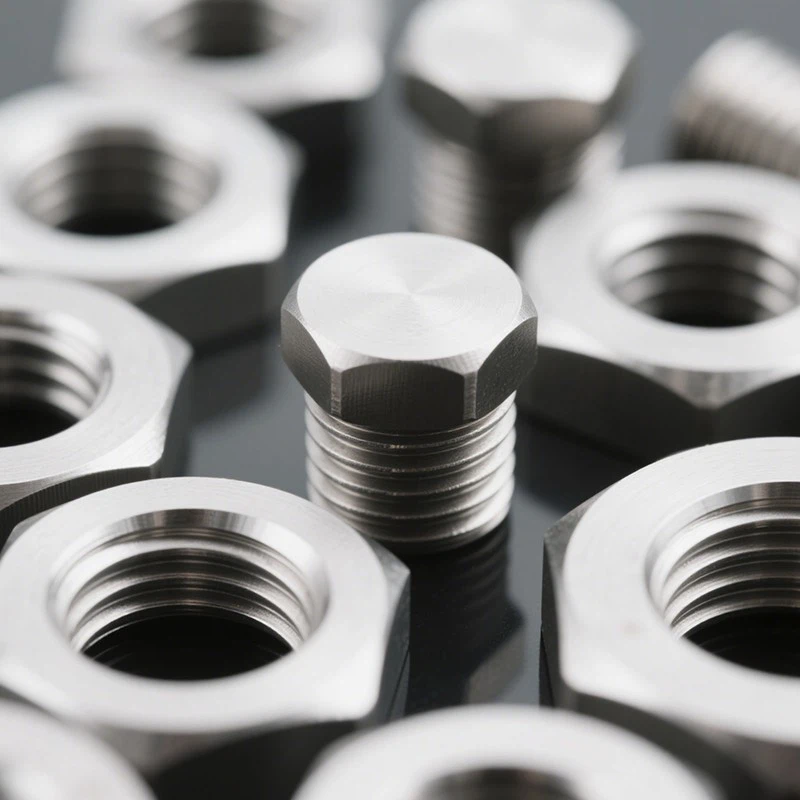
- Diameter: The diameter of a capnut is one of the most important dimensions, as it determines the fit with the corresponding bolt or screw. The tolerance for the major diameter of a capnut is usually specified in the industry standards. For example, for a standard hexagon cap nut, the tolerance for the major diameter may be within a few thousandths of an inch or a few hundredths of a millimeter, depending on the size and class of the nut.
- Pitch: The pitch of a capnut refers to the distance between adjacent threads. It is crucial for ensuring proper engagement with the bolt or screw. Similar to the diameter, the pitch also has a specified tolerance range. Deviations in pitch can lead to difficulties in threading and may affect the clamping force of the connection.
- Height: The height of a capnut is another dimension that is subject to tolerance. The height tolerance ensures that the capnut fits properly within the assembly and provides the required clearance. In some applications, such as where space is limited, tight height tolerances may be necessary.
- Surface finish: The surface finish of a capnut can also have a tolerance range. A smooth surface finish is important for reducing friction and preventing galling during installation and use. The roughness of the surface is typically specified in terms of micro - inches or micrometers, and manufacturers need to ensure that the surface finish of the capnuts meets the required tolerance.
To ensure that our capnuts meet the required tolerance ranges, we implement a rigorous quality control system in our manufacturing process. We use advanced measuring equipment, such as calipers, micrometers, and thread gauges, to measure the dimensions of the capnuts at various stages of production. Our quality control team also conducts regular inspections and tests to verify the compliance of the capnuts with the relevant industry standards and customer requirements.
In addition to meeting the standard tolerance ranges, we also offer custom - made capnuts with specific tolerance requirements. We understand that some customers may have unique applications that demand capnuts with tighter or looser tolerances than the standard ones. Our experienced engineering team can work closely with customers to design and manufacture capnuts that meet their exact specifications.
As a reliable capnuts supplier, we offer a wide range of capnuts, including Hexagon Cap Nut and Hex Nut. You can find more information about our capnuts on our website Capnuts.
If you are in the market for high - quality capnuts with precise tolerance control, we encourage you to contact us for procurement and further discussions. Our team of experts is always ready to assist you in finding the most suitable capnuts for your application.
References:
- American National Standards Institute (ANSI) standards for fasteners
- International Organization for Standardization (ISO) standards (e.g., ISO 4032, ISO 4033)
- Deutsches Institut für Normung (DIN) standards for nuts