

In the realm of fasteners, the choice of materials plays a crucial role in determining the performance and longevity of components, especially when used in challenging environments. One such environment that presents unique challenges is the salt - water environment. As a Stainless Steel Nut supplier, I am often confronted with the question: Are stainless steel nuts suitable for use in a salt - water environment? This blog post aims to delve into this topic, exploring the properties of stainless steel, the effects of salt - water on materials, and whether stainless steel nuts are a viable option in such conditions.
Understanding Stainless Steel
Stainless steel is an alloy composed mainly of iron, with a minimum of 10.5% chromium content. The chromium in stainless steel forms a thin, invisible layer of chromium oxide on the surface when exposed to oxygen. This passive layer acts as a protective barrier, preventing further oxidation of the underlying metal and providing resistance to corrosion.
There are different grades of stainless steel, each with its own composition and properties. The most commonly used grades for fasteners are austenitic stainless steels such as 304 and 316. Grade 304 stainless steel contains approximately 18% chromium and 8% nickel and offers good general corrosion resistance. Grade 316, on the other hand, has additional molybdenum (around 2 - 3%), which enhances its resistance to pitting and crevice corrosion, making it more suitable for harsh environments.
The Properties of Salt - Water
Salt - water, or seawater, is a complex solution containing various dissolved salts, mainly sodium chloride (NaCl), along with other ions such as magnesium, calcium, and sulfate. The high salt content in seawater makes it an electrolyte, which can accelerate the corrosion process. When a metal is immersed in salt - water, an electrochemical reaction occurs. The metal acts as an anode, where oxidation takes place, and the surrounding environment serves as a cathode. This reaction leads to the loss of metal atoms from the surface, resulting in corrosion.
In addition to the general corrosion caused by the electrochemical reaction, salt - water can also cause pitting corrosion and crevice corrosion. Pitting corrosion occurs when small holes or pits form on the metal surface due to local breakdown of the passive layer. Crevice corrosion, on the other hand, happens in narrow gaps or crevices where the flow of oxygen is restricted, leading to the formation of an aggressive environment within the crevice.
Performance of Stainless Steel Nuts in Salt - Water
The suitability of stainless steel nuts in a salt - water environment largely depends on the grade of stainless steel used. As mentioned earlier, 316 stainless steel is generally considered more suitable for salt - water applications compared to 304 stainless steel due to its higher molybdenum content.
In many cases, 316 stainless steel nuts can provide adequate corrosion resistance in splash zones, tidal areas, or low - flow salt - water environments. The passive layer on the surface of 316 stainless steel nuts can withstand the corrosive effects of salt - water to a certain extent, preventing the formation of rust and maintaining the structural integrity of the fasteners.
However, it is important to note that even 316 stainless steel is not completely immune to corrosion in salt - water. In highly corrosive salt - water conditions, such as in stagnant seawater with high levels of pollutants or in areas with high chloride concentrations, pitting and crevice corrosion can still occur over time. Factors such as temperature, oxygen levels, and the presence of other contaminants can also influence the corrosion rate of stainless steel nuts in salt - water.
Applications of Stainless Steel Nuts in Salt - Water Environments
Despite the potential for corrosion, stainless steel nuts are still widely used in salt - water environments due to their many advantages. Here are some common applications:
Marine Industry
In the marine industry, stainless steel nuts are used in various applications such as boatbuilding, ship repair, and offshore structures. They are used to secure components like deck fittings, railing systems, and engine mounts. While they may require regular inspection and maintenance, stainless steel nuts offer a good balance between cost, strength, and corrosion resistance in this environment.
Coastal Infrastructure
Coastal infrastructure projects, such as piers, jetties, and seawalls, also rely on stainless steel nuts. These fasteners are used to assemble structural components and ensure the stability of the infrastructure. The use of stainless steel nuts helps to extend the service life of the structures in the harsh salt - water environment.
Desalination Plants
Desalination plants, which convert salt - water into freshwater, use a large number of stainless steel nuts in their equipment. The nuts are used to secure pipes, pumps, and other components in the plant. The corrosion resistance of stainless steel is essential to prevent contamination of the freshwater and ensure the efficient operation of the plant.
Choosing the Right Stainless Steel Nuts for Salt - Water
When selecting stainless steel nuts for use in a salt - water environment, it is important to consider the following factors:

Grade of Stainless Steel
As mentioned earlier, 316 stainless steel is generally the preferred choice for salt - water applications. However, in less corrosive salt - water conditions, 304 stainless steel may also be suitable, especially if cost is a major consideration.
Surface Finish
A smooth surface finish can help to improve the corrosion resistance of stainless steel nuts. A polished or passivated surface reduces the likelihood of crevice corrosion and makes it easier to clean the nuts, removing any salt deposits that may accumulate on the surface.
Nut Design
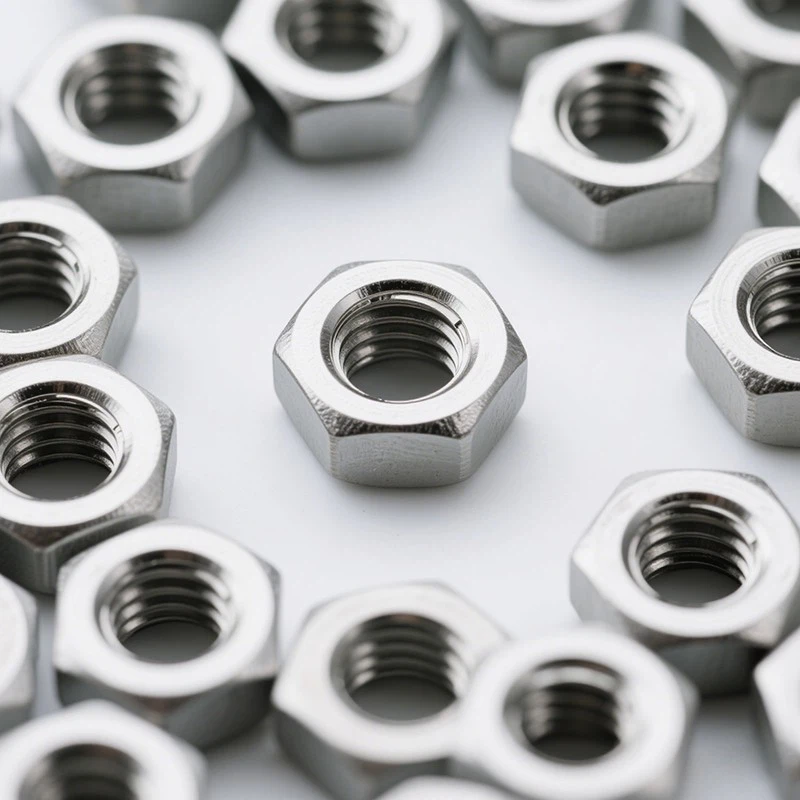
The design of the nut can also affect its performance in a salt - water environment. For example, hex nuts with a full - face design can provide better protection against corrosion compared to nuts with a chamfered face, as the full - face design minimizes the area where crevice corrosion can occur. If you are interested in high - quality hex nuts, you can check out our Hex Nut Screw.
Maintenance of Stainless Steel Nuts in Salt - Water
Proper maintenance is essential to ensure the long - term performance of stainless steel nuts in a salt - water environment. Here are some maintenance tips:
Regular Cleaning
Regularly cleaning the nuts with fresh water can help to remove salt deposits and other contaminants from the surface. This reduces the risk of corrosion and prolongs the life of the nuts.
Inspection
Periodically inspect the nuts for signs of corrosion, such as pitting or rust. If any signs of corrosion are detected, it is important to take appropriate action, such as replacing the affected nuts or applying a protective coating.
Coating
In some cases, applying a protective coating to the stainless steel nuts can further enhance their corrosion resistance. Coatings such as epoxy, zinc, or powder coatings can provide an additional layer of protection against the corrosive effects of salt - water.
Conclusion
In conclusion, stainless steel nuts, especially those made of 316 stainless steel, can be suitable for use in a salt - water environment under certain conditions. While they offer good corrosion resistance, it is important to be aware of the potential for corrosion and take appropriate measures to ensure their long - term performance. By choosing the right grade of stainless steel, considering the surface finish and nut design, and implementing proper maintenance procedures, stainless steel nuts can provide reliable fastening solutions in salt - water applications.
If you are in the market for high - quality Stainless Steel Nut, we are here to help. Our wide range of stainless steel nuts, including Metric Nuts, are designed to meet the needs of various industries, including those in salt - water environments. Contact us today to discuss your specific requirements and explore the possibilities of using our products in your projects.
References
- ASM International. (2000). Stainless Steels: ASM Specialty Handbook. Materials Park, OH: ASM International.
- Jones, D. A. (1996). Principles and Prevention of Corrosion. Upper Saddle River, NJ: Prentice - Hall.
- Uhlig, H. H., & Revie, R. W. (1985). Corrosion and Corrosion Control: An Introduction to Corrosion Science and Engineering. Hoboken, NJ: Wiley - Interscience.