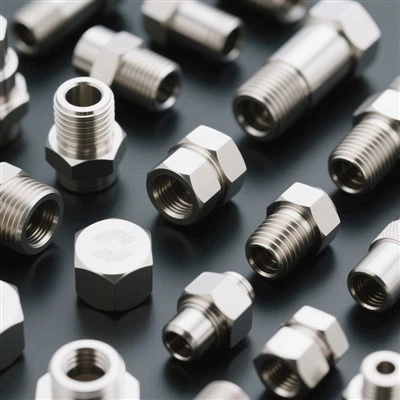
Product advantages and features
Ease of Use: Hex nut screws are widely favored due to their ease of handling. The hexagonal shape of the nut allows for a firm grip with common tools such as wrenches and sockets. This enables quick and efficient tightening and loosening, reducing the time and effort required for assembly and disassembly processes.
High Torque Transmission: The six-sided design of the hex nut distributes torque evenly during tightening. This ensures a secure and reliable connection, minimizing the risk of the nut loosening under stress or vibration. As a result, hex nut screws are suitable for applications where a strong and stable joint is essential.
Versatility: Hex nut screws are available in a wide range of sizes, materials, and thread pitches, making them highly adaptable to various applications. They can be used in different industries, from automotive and machinery to construction and electronics, to meet diverse fastening requirements.
Cost-Effectiveness: Compared to some other types of fasteners, hex nut screws are relatively inexpensive to produce and purchase. Their widespread availability and simplicity of design contribute to their cost-effectiveness, making them a popular choice for both large-scale manufacturing and DIY projects.
Product Type
Standard Hex Nuts: These are the most common type of hex nuts, characterized by their plain, unadorned hexagonal shape. They are typically used in general-purpose applications where a basic fastening solution is required.
Lock Nuts: Lock nuts are designed to prevent loosening due to vibration or rotation. They may have features such as nylon inserts, prevailing torque, or serrated edges to provide additional locking force. Lock nuts are commonly used in applications where the nut needs to remain securely fastened, such as in automotive engines and machinery.
Flange Nuts: Flange nuts have a wide, flat base that provides increased bearing surface and helps to distribute the load more evenly. This makes them suitable for applications where a higher level of stability and resistance to loosening is required, such as in sheet metal or thin-walled structures.
Self-Locking Nuts: Self-locking nuts are designed to lock themselves in place without the need for additional locking devices. They typically have a deformed thread or a special coating that creates friction and prevents the nut from backing off. Self-locking nuts are commonly used in applications where vibration or movement may cause the nut to loosen, such as in aerospace and automotive industries.
Product Application
Automotive Industry: Hex nut screws are extensively used in the automotive industry for various applications, including engine assembly, chassis construction, and bodywork. They are used to fasten components such as engine mounts, suspension parts, and exhaust systems, ensuring the structural integrity and performance of the vehicle.
Machinery and Equipment: In the manufacturing and industrial sectors, hex nut screws are essential for assembling and maintaining machinery and equipment. They are used to secure parts such as gears, shafts, and motors, providing a reliable and stable connection. Hex nut screws are also commonly used in conveyor systems, robotics, and automation equipment.
Construction Industry: Hex nut screws play a crucial role in the construction industry, where they are used for a wide range of applications, including building structures, bridges, and infrastructure projects. They are used to fasten structural components such as beams, columns, and panels, ensuring the stability and safety of the construction. Hex nut screws are also used in plumbing, electrical, and HVAC systems.
Electronics Industry: In the electronics industry, hex nut screws are used to assemble and secure electronic components and devices. They are used to fasten printed circuit boards, enclosures, and connectors, ensuring the proper functioning and reliability of the electronics. Hex nut screws are also used in the aerospace and defense industries for electronic equipment and systems.
Product material
Steel: Steel is the most commonly used material for hex nut screws due to its strength, durability, and affordability. Steel hex nut screws can be made from different grades of steel, such as carbon steel, alloy steel, and stainless steel, depending on the application requirements. Carbon steel hex nut screws are suitable for general-purpose applications, while alloy steel hex nut screws offer higher strength and resistance to wear and corrosion. Stainless steel hex nut screws are ideal for applications where corrosion resistance is required, such as in marine, chemical, and food processing industries.
Aluminum: Aluminum hex nut screws are lightweight and corrosion-resistant, making them suitable for applications where weight reduction and corrosion resistance are important. They are commonly used in the aerospace, automotive, and electronics industries, as well as in outdoor applications such as signage and lighting fixtures.
Brass: Brass hex nut screws are known for their excellent corrosion resistance, conductivity, and aesthetic appeal. They are commonly used in plumbing, electrical, and decorative applications, where a combination of functionality and appearance is required. Brass hex nut screws can be made from different grades of brass, such as yellow brass, red brass, and naval brass, depending on the application requirements.
Plastic: Plastic hex nut screws are lightweight, non-conductive, and resistant to corrosion and chemicals. They are commonly used in applications where electrical insulation, chemical resistance, or weight reduction is required, such as in electronics, medical devices, and consumer products. Plastic hex nut screws can be made from different types of plastics, such as nylon, polypropylene, and polyethylene, depending on the application requirements.
FAQ
Hot Tags: hex nut screw, China hex nut screw manufacturers, suppliers, factory, Barrel Nut, Hex Bolt Nut, Hex Head Barrel Nut, Long Hex Nut, Metric Nuts, Stainless Steel Nut