Product advantages and features
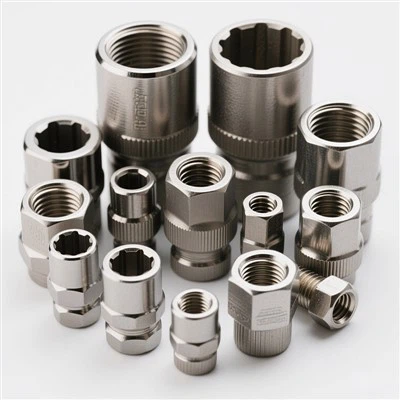
Precision: CNC lathe machine parts are designed to achieve extremely high levels of accuracy. For example, the spindle system, which holds the workpiece, can maintain a very precise rotational speed and alignment. This precision allows for the production of parts with tight tolerances, which is crucial in industries such as aerospace and medical device manufacturing.
Efficiency: Automated control of parts like the tool changer and feed mechanism reduces setup times and increases the overall machining speed. The tool changer can quickly select and position the appropriate cutting tool, minimizing idle time and improving productivity.
Consistency: Once programmed, CNC lathe machines can produce identical parts repeatedly. Parts such as the linear guides ensure smooth and consistent movement of the carriage, resulting in consistent part quality from one production run to another.
Versatility: Many parts of a CNC lathe, such as the turret and the programmable control system, can be easily reconfigured to machine a wide variety of part geometries. This makes CNC lathes suitable for both small batch production and large-scale manufacturing.
Product Type
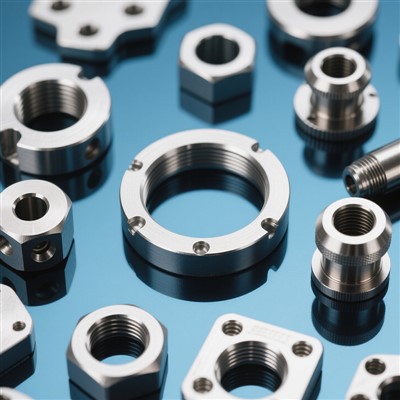
CNC Milled Parts: Milling is a machining process that uses a rotating cutting tool to remove material from a workpiece. CNC milling machines can produce a wide variety of parts, including flat surfaces, slots, holes, and complex 3D shapes.
CNC Turned Parts: Turning is a machining process that involves rotating a workpiece while a cutting tool removes material from its surface. CNC lathes are used to produce cylindrical parts, such as shafts, rods, and pipes.
CNC Drilled Parts: Drilling is a machining process that uses a rotating drill bit to create holes in a workpiece. CNC drilling machines can drill holes of various sizes and depths with high precision.
CNC Grinded Parts: Grinding is a machining process that uses an abrasive wheel to remove material from a workpiece. CNC grinders are used to produce parts with high surface finish and tight tolerances, such as precision bearings and gears.
CNC Routered Parts: Routing is a machining process that uses a rotating cutting tool to remove material from a workpiece. CNC routers are used to produce parts from a variety of materials, including wood, plastic, and metal.
CNC Laser Cut Parts: Laser cutting is a machining process that uses a high-powered laser beam to cut through materials. CNC laser cutters can produce parts with high precision and intricate details, making them suitable for a wide range of applications.
Product Application
Aerospace Industry: CNC products are widely used in the aerospace industry for the production of components such as engine parts, wing structures, and landing gear. The high precision and reliability of CNC technology are essential for ensuring the safety and performance of aircraft.
Automotive Industry: CNC products play a crucial role in the automotive industry, from the production of engine components to the manufacturing of interior and exterior parts. CNC technology allows for the production of complex parts with tight tolerances, improving the performance and efficiency of vehicles.
Medical Industry: CNC products are used in the medical industry for the production of surgical instruments, implants, and medical devices. The high precision and biocompatibility of CNC materials are essential for ensuring the safety and effectiveness of medical products.
Electronics Industry: CNC products are used in the electronics industry for the production of printed circuit boards (PCBs), semiconductor components, and electronic enclosures. The high precision and repeatability of CNC technology are essential for ensuring the performance and reliability of electronic products.
Manufacturing Industry: CNC products are used in a wide range of manufacturing industries, including machinery, robotics, and consumer goods. CNC technology allows for the production of complex parts with high precision and efficiency, improving the competitiveness of manufacturing companies.
Prototyping and Customization: CNC technology is also widely used for prototyping and customization of products. CNC machines can quickly produce prototypes of new products, allowing designers and engineers to test and refine their designs before mass production. Additionally, CNC technology allows for the customization of products to meet the specific needs of customers.
Product material
Metals: Metals such as aluminum, steel, titanium, and brass are commonly used in CNC products. These materials offer high strength, durability, and corrosion resistance, making them suitable for a wide range of applications.
Plastics: Plastics such as acrylic, polycarbonate, and ABS are also widely used in CNC products. These materials offer low cost, lightweight, and ease of machining, making them suitable for applications where weight and cost are important factors.
Composites: Composites such as carbon fiber and fiberglass are increasingly being used in CNC products. These materials offer high strength-to-weight ratio, stiffness, and corrosion resistance, making them suitable for applications where weight and performance are critical factors.
Wood: Wood is a traditional material that is still used in CNC products, especially for applications such as furniture and cabinetry. CNC routers can be used to produce intricate designs and patterns in wood, making it a popular choice for decorative applications.
Ceramics: Ceramics such as alumina and zirconia are used in CNC products for applications where high hardness, wear resistance, and chemical resistance are required. These materials are commonly used in applications such as cutting tools, bearings, and insulators.
FAQ
Hot Tags: CNC lathe machine parts, China CNC lathe machine parts manufacturers, suppliers, factory, Machined Stainless Steel Parts, cnc machined parts, CNC Lathe Machine Parts, Precision Machining Part