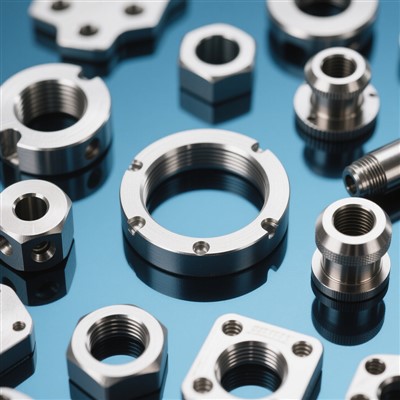
Product Introduction
Machined stainless steel parts are components crafted from stainless steel through various machining processes. Stainless steel, renowned for its corrosion resistance, durability, and aesthetic appeal, makes these parts suitable for a wide range of applications. These parts are produced using methods like turning, milling, drilling, and grinding. Turning shapes cylindrical components, while milling creates complex geometries. Drilling forms holes, and grinding refines surfaces for precision. They find use in industries such as aerospace, where high strength and resistance to harsh environments are crucial; in the medical field for surgical instruments due to their hygienic properties; and in the food and beverage industry, as they are non-reactive and easy to clean. With excellent mechanical properties and the ability to maintain a clean finish, machined stainless steel parts play an essential role in modern manufacturing.
Product advantages and features
Corrosion Resistance: Stainless steel contains a high percentage of chromium, which forms a thin, invisible oxide layer on the surface. This layer protects the metal from rust and corrosion, making it ideal for applications where exposure to moisture, chemicals, or harsh environments is common. For example, in marine applications, stainless steel parts can withstand the corrosive effects of saltwater for long periods without significant degradation.
High Strength and Durability: Machined stainless steel parts possess excellent mechanical properties, including high tensile strength and hardness. They can endure heavy loads, impacts, and wear, ensuring a long service life. This makes them suitable for components in machinery, automotive, and aerospace industries that require reliable and robust parts.
Hygienic Properties: Stainless steel is non-porous and easy to clean, making it a preferred material in industries where hygiene is crucial, such as food processing, pharmaceuticals, and medical equipment manufacturing. The smooth surface of stainless steel parts resists the growth of bacteria and other contaminants, meeting strict hygiene standards.
Aesthetic Appeal: Stainless steel has a sleek and modern appearance, which is highly valued in architectural and decorative applications. Its bright, shiny finish can enhance the visual appeal of products, and it can be easily polished or brushed to achieve different surface textures.
Heat Resistance: Many types of stainless steel can withstand high temperatures without losing their mechanical properties. This makes them suitable for applications in furnaces, heat exchangers, and exhaust systems, where exposure to elevated temperatures is common.
Product Type
Precision Machined Components: These are highly accurate parts that are typically produced using CNC (Computer Numerical Control) machining. They can include small components such as screws, bolts, pins, and shafts, as well as more complex parts with intricate geometries. Precision machined stainless steel parts are often used in industries such as electronics, medical devices, and aerospace.
Forged Stainless Steel Parts: Forging involves shaping the stainless steel by applying high pressure and heat. Forged parts have improved mechanical properties, such as increased strength and durability, compared to parts produced by other methods. They are commonly used in applications where high stress and load-bearing capabilities are required, such as in automotive drivetrain components and industrial machinery.
Cast Stainless Steel Parts: Casting is a process where molten stainless steel is poured into a mold to create a specific shape. Cast stainless steel parts can have complex geometries and are often used in applications where mass production is required. They are commonly used in the manufacturing of valves, pumps, and other fluid handling components.
Sheet Metal Fabricated Stainless Steel Parts: Sheet metal fabrication involves cutting, bending, and shaping thin sheets of stainless steel to create parts such as enclosures, brackets, and panels. Sheet metal fabricated parts are widely used in industries such as electronics, appliances, and architectural applications.
Product Application
Automotive Industry: Stainless steel parts are used in various automotive components, including exhaust systems, engine components, brakes, and suspension systems. Their corrosion resistance and high strength make them ideal for withstanding the harsh operating conditions of vehicles.
Aerospace Industry: In the aerospace industry, stainless steel parts are used in aircraft engines, landing gear, structural components, and interior fittings. Their high strength-to-weight ratio, corrosion resistance, and heat resistance are essential for ensuring the safety and performance of aircraft.
Medical and Pharmaceutical Industries: Stainless steel is a preferred material for medical implants, surgical instruments, and pharmaceutical equipment due to its biocompatibility, corrosion resistance, and ease of sterilization. It is also used in the manufacturing of medical devices such as pacemakers, orthopedic implants, and dental instruments.
Food and Beverage Industry: Stainless steel parts are widely used in food processing equipment, such as mixers, conveyors, tanks, and pipes. Their hygienic properties and corrosion resistance make them suitable for handling food products and ensuring food safety.
Architectural and Construction Industry: Stainless steel is used in architectural applications such as facades, railings, handrails, and decorative elements. Its aesthetic appeal, corrosion resistance, and durability make it a popular choice for enhancing the visual appeal and functionality of buildings.
Product material
Austenitic Stainless Steels: This is the most common type of stainless steel and includes grades such as 304 and 316. Austenitic stainless steels are characterized by their high corrosion resistance, good formability, and excellent weldability. They are widely used in a variety of applications, including food processing, medical equipment, and architectural applications.
Ferritic Stainless Steels: Ferritic stainless steels contain a high percentage of chromium and have a ferritic crystal structure. They are known for their good corrosion resistance, especially in mild environments, and are often used in applications such as automotive exhaust systems, kitchen appliances, and architectural trim.
Martensitic Stainless Steels: Martensitic stainless steels are heat-treatable and have high strength and hardness. They are commonly used in applications where wear resistance and strength are required, such as in knives, scissors, and turbine blades.
Duplex Stainless Steels: Duplex stainless steels have a microstructure consisting of both austenite and ferrite phases. They offer a combination of high strength, corrosion resistance, and good weldability. Duplex stainless steels are often used in applications such as oil and gas pipelines, chemical processing equipment, and marine applications.
FAQ
Hot Tags: machined stainless steel parts, China machined stainless steel parts manufacturers, suppliers, factory, CNC Lathe Machine Parts, cnc machined parts, Machined Stainless Steel Parts, Precision Machining Part