

Hey there! As a nut supplier, I'm super stoked to take you through the production process of nuts. It's a fascinating journey that involves a bunch of steps, from raw materials to the finished product. So, let's dive right in!
Step 1: Raw Material Selection
The first and most crucial step in nut production is selecting the right raw materials. We source high - quality metal, usually steel, aluminum, or brass. The choice of metal depends on the type of nut we're making and its intended use. For example, steel is great for heavy - duty applications because it's strong and durable. Aluminum, on the other hand, is lightweight and corrosion - resistant, making it ideal for applications where weight is a concern.
We work closely with trusted suppliers to ensure that the raw materials meet our strict quality standards. Before we start processing, we conduct thorough inspections of the incoming metal to check for any impurities or defects. This helps us avoid any issues down the line and ensures that our nuts are of the highest quality.
Step 2: Cutting and Shaping
Once we have the raw material, it's time to cut and shape it into the basic form of a nut. We use specialized cutting machines that can precisely cut the metal into the right size and shape. For instance, if we're making a Barrel Nut, the machine will cut the metal rod to the appropriate length and then start shaping it into the characteristic barrel shape.
The cutting process is highly precise. We use computer - controlled machines that can cut the metal with an accuracy of a few thousandths of an inch. This precision is essential because it ensures that the nuts fit perfectly with the corresponding bolts or screws.
Step 3: Threading
Threading is one of the most important steps in nut production. The threads on a nut are what allow it to screw onto a bolt or screw. We use threading machines to create the threads on the inside of the nut. There are different types of threading methods, such as single - point threading and multi - point threading.
Single - point threading is a slower but more precise method. It involves using a single cutting tool to create the threads one at a time. Multi - point threading, on the other hand, is faster and is often used for mass production. It uses multiple cutting tools to create the threads simultaneously.
The quality of the threading is crucial. The threads need to be uniform, smooth, and have the right pitch. If the threads are not cut correctly, the nut may not screw on properly or may not hold the bolt tightly.
Step 4: Heat Treatment
After the nuts are cut and threaded, they go through a heat treatment process. Heat treatment is used to improve the strength and hardness of the nuts. There are different types of heat treatment processes, such as annealing, quenching, and tempering.
Annealing is a process where the nuts are heated to a specific temperature and then slowly cooled. This helps to relieve internal stresses in the metal and makes the nuts more ductile. Quenching involves heating the nuts to a high temperature and then rapidly cooling them in a liquid, such as oil or water. This makes the nuts very hard but also brittle. To reduce the brittleness, the nuts are then tempered, which involves heating them to a lower temperature and holding them there for a certain period of time.
Step 5: Surface Finishing
Surface finishing is an important step that not only improves the appearance of the nuts but also provides protection against corrosion. There are several surface finishing options available, such as plating, painting, and powder coating.
Plating involves depositing a thin layer of metal, such as zinc or chrome, on the surface of the nut. This not only gives the nut a shiny appearance but also provides a protective barrier against corrosion. Painting and powder coating are also popular finishing options. They can be used to add color to the nuts and provide additional protection.
Step 6: Quality Control
Quality control is an ongoing process throughout the production of nuts. We have a team of quality control experts who inspect the nuts at every stage of the production process. They check for things like size, shape, thread quality, and surface finish.
We use a variety of inspection tools, such as calipers, micrometers, and thread gauges, to ensure that the nuts meet our quality standards. Any nuts that do not meet the standards are rejected and either re - worked or discarded.
Step 7: Packaging
Once the nuts pass the quality control checks, they are ready for packaging. We use high - quality packaging materials to protect the nuts during shipping and storage. The packaging usually includes a label that provides information about the type of nut, its size, and any other relevant details.
Different Types of Nuts
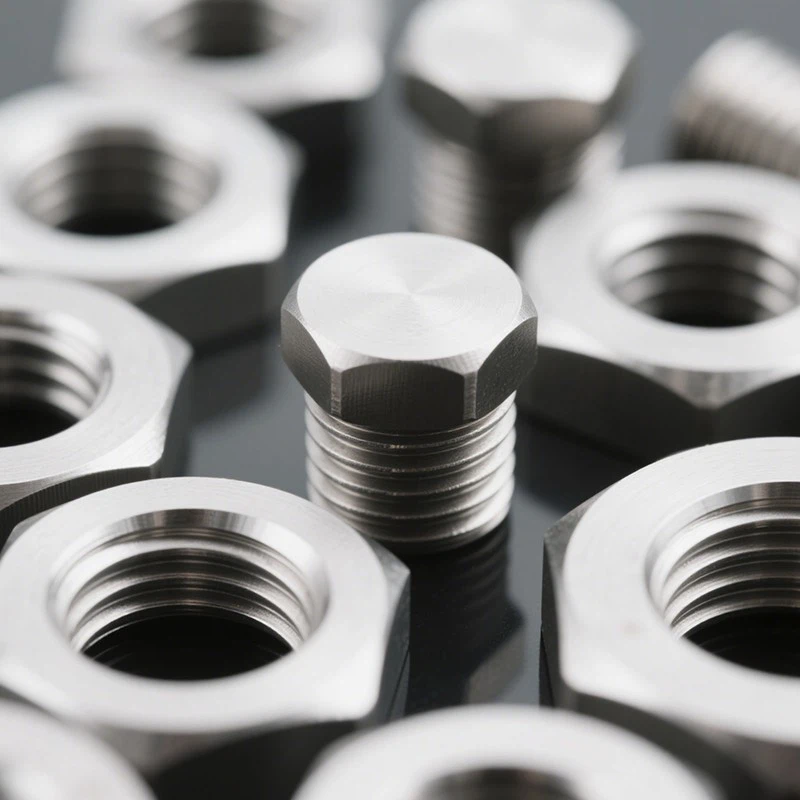
There are many different types of nuts, each with its own unique production process and application. For example, Hex Head Barrel Nut has a hexagonal head and a barrel - shaped body. It's often used in applications where a strong and secure connection is required.
Hexagon Cap Nut is another popular type of nut. It has a hexagonal shape and a closed end, which provides additional protection against dirt and debris.
Why Choose Our Nuts
As a nut supplier, we take pride in providing high - quality nuts at competitive prices. Our nuts are made using the latest technology and manufacturing processes, ensuring that they meet the highest standards of quality and performance.
We have a wide range of nuts available, from standard sizes to custom - made products. Whether you need a few nuts for a small project or a large quantity for an industrial application, we can meet your needs.

If you're in the market for nuts, I encourage you to get in touch with us. We'd be more than happy to discuss your requirements and provide you with a quote. Our team of experts is always ready to assist you with any questions or concerns you may have. So, don't hesitate to reach out and start a conversation about your nut needs.
References
- "Manufacturing Processes for Engineering Materials" by Serope Kalpakjian and Steven R. Schmid
- "Mechanical Engineering Design" by Joseph E. Shigley and Charles R. Mischke