

Hey there! As a supplier of hex bolt nuts, I get asked a lot about the difference between hex bolts and hex nuts. It might seem like a small thing, but these two components play a huge role in construction, machinery, and countless other industries. So, let's dive in and break it down.
First off, let's talk about hex bolts. A hex bolt, as the name suggests, has a hexagonal head. This shape isn't just for looks; it's incredibly practical. The six-sided head allows for easy gripping with a wrench. You can apply a good amount of torque without the tool slipping off, which is super important when you're trying to secure something tightly.
Hex bolts come in all sorts of sizes and materials. You've got your standard carbon steel ones, which are strong and relatively inexpensive. Then there are stainless steel hex bolts, which are great for outdoor use or in environments where corrosion is a concern. They can withstand the elements and won't rust like regular steel.

The threads on a hex bolt are another key feature. They're designed to screw into a tapped hole or mate with a nut. The pitch of the threads can vary, depending on the application. A fine pitch thread is better for applications where you need a more precise fit, like in machinery. A coarse pitch thread, on the other hand, is quicker to install and is often used in construction.
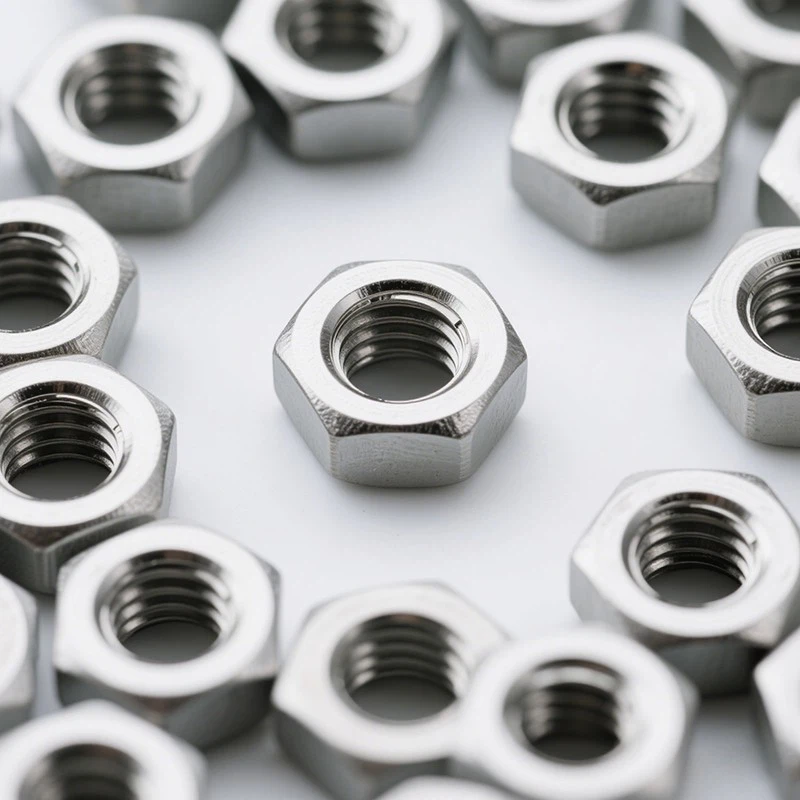
Now, let's move on to hex nuts. A hex nut is basically the counterpart to a hex bolt. It's also hexagonal in shape, which means it can be easily tightened and loosened with a wrench, just like the bolt. The main function of a hex nut is to secure the bolt in place. When you screw a hex bolt into a hex nut, it creates a strong connection that can hold up under a lot of stress.
Just like hex bolts, hex nuts come in different materials. You can find them in carbon steel, stainless steel, and even brass. Each material has its own advantages. For example, brass hex nuts are great for electrical applications because they're a good conductor of electricity.
One thing to note about hex nuts is that they come in different types. There are standard hex nuts, which are the most common. Then there are lock nuts, which have a special feature that prevents them from loosening over time. This is really useful in applications where vibration is an issue, like in engines or machinery.
So, what's the main difference between a hex bolt and a hex nut? Well, the most obvious difference is their function. A hex bolt is used to fasten two or more objects together by screwing into a tapped hole or a nut. A hex nut, on the other hand, is used in conjunction with a bolt to create a secure connection.
Another difference is their appearance. A hex bolt has a head on one end and threads on the other. The head is usually larger than the diameter of the bolt shaft. A hex nut, on the other hand, is just a small, hexagonal piece with a threaded hole in the middle.
In terms of installation, hex bolts are usually inserted through a hole in the objects you're trying to fasten, and then a hex nut is screwed onto the end of the bolt. This creates a strong, secure connection.
Now, let's talk about some of the different types of nuts that are related to hex nuts. You might have heard of Metric Nuts. These are nuts that follow the metric system of measurement. They're commonly used in countries that use the metric system, and they're available in a wide range of sizes.
Another type of nut is the Barrel Nut. This nut has a cylindrical shape and is often used in furniture construction. It's designed to be inserted into a pre-drilled hole in one piece of wood, and then a bolt is screwed into it from another piece of wood. This creates a strong, hidden connection.
Finally, there's the Hex Nut Screw. This is a combination of a hex nut and a screw. It has a hexagonal head on one end and threads on the other, just like a bolt. However, it's usually used in applications where you need to fasten something to a surface without using a separate nut.
As a supplier of hex bolt nuts, I know how important it is to choose the right components for your project. Whether you're building a house, a piece of machinery, or just doing some DIY work around the house, having the right hex bolts and nuts can make all the difference.
If you're in the market for hex bolts, hex nuts, or any other types of fasteners, I'd love to help. We've got a wide range of products in different sizes, materials, and types. Just reach out to us, and we can discuss your specific needs. We're here to make sure you get the best products at the best prices.
So, don't hesitate to contact us if you've got any questions or if you're ready to place an order. We're looking forward to working with you!
References
- Engineering Materials Handbook.
- Fastener Manufacturing and Standards.