

You know, as a supplier of hex head barrel nuts, I've had a front - row seat to the fascinating world of their manufacturing process. It's not just a bunch of mechanical steps; it's an art that combines precision, technology, and a whole lot of know - how. So, let's dive right into what goes on behind the scenes to create these essential fasteners.
1. Material Selection
The first step in making hex head barrel nuts is choosing the right material. The material you pick will determine the nut's strength, durability, and resistance to corrosion. We usually work with a few common options.
One popular choice is steel. Steel is great because it's strong, readily available, and relatively inexpensive. It can be further heat - treated to enhance its mechanical properties, making it suitable for heavy - duty applications. For example, in the construction industry, where nuts need to hold up large structures, steel hex head barrel nuts are a go - to.
Another option is stainless steel. Stainless steel nuts, like the ones you can find here, are highly corrosion - resistant. This makes them ideal for outdoor use or in environments where they'll be exposed to moisture, chemicals, or saltwater. They're often used in marine applications, food processing plants, and architectural projects.
Brass is also used sometimes. It has good electrical conductivity and a nice aesthetic appearance. You'll often see brass hex head barrel nuts in electrical installations and decorative applications.

2. Cutting the Raw Material
Once the material is selected, it's time to cut it into the right size. We use different cutting methods depending on the type of material and the volume of production.
For small - scale production or when dealing with very hard materials, we might use a saw. A bandsaw or a circular saw can be adjusted to cut the raw material into blanks of the appropriate length. This method gives us a high level of control, but it can be a bit slow.
In large - scale production, we often use a machine called a cold - cutting machine. This machine uses a high - pressure hydraulic system to quickly and accurately cut the material. It's much faster than sawing, which means we can produce more nuts in less time.
3. Shaping the Blanks
After cutting, the blanks need to be shaped into the characteristic hex head barrel nut form. The first part of this process is creating the barrel shape.
We use a process called cold forging. Cold forging involves using a press to shape the metal at room temperature. The blank is placed in a die, and the press applies a large amount of force to deform the metal into the barrel shape. This process is great because it increases the strength of the nut by aligning the metal's grain structure.
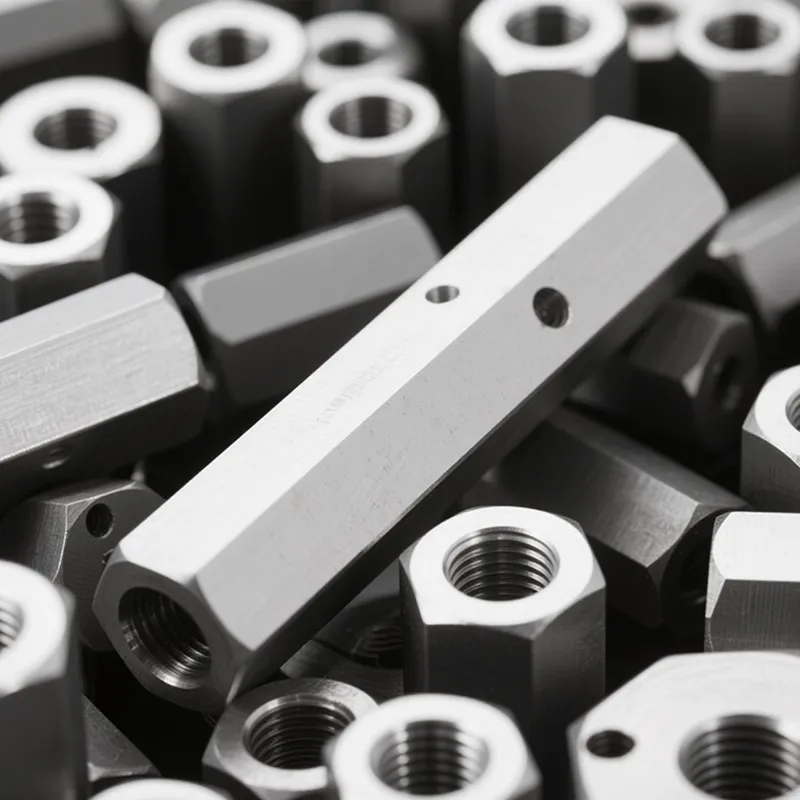
Next, we need to create the hex head. This is usually done using a machining process. A lathe or a milling machine can be used to cut and shape the top part of the barrel into a hexagonal shape. The machine is programmed to make precise cuts, ensuring that the hex head has the correct dimensions and angles.
4. Threading
One of the most important steps in making a hex head barrel nut is threading. The threads are what allow the nut to be screwed onto a bolt, so they need to be accurate and well - formed.
There are a few different ways to create threads. One common method is tapping. Tapping involves using a tap, which is a tool with the reverse shape of the desired thread. The tap is inserted into the hole in the barrel nut and rotated, cutting the threads into the metal. This method is relatively simple and can be done on a small - scale using a hand tap or on a larger scale using a tapping machine.
Another method is thread rolling. In thread rolling, the blank is passed between two dies with the thread pattern. The dies apply pressure to the blank, causing the metal to flow and form the threads. Thread rolling is a faster and more efficient method than tapping, and it also creates stronger threads because it doesn't cut away any metal.
5. Heat Treatment
Heat treatment is an optional but often crucial step in the manufacturing process. It can significantly improve the mechanical properties of the hex head barrel nut.
For steel nuts, we might use a process called quenching and tempering. Quenching involves heating the nut to a high temperature and then rapidly cooling it in a liquid, such as oil or water. This makes the steel very hard but also brittle. To reduce the brittleness, we then temper the nut by heating it to a lower temperature and holding it there for a certain period of time. This process results in a nut that is both strong and tough.
Stainless steel nuts may also undergo a heat - treatment process to improve their corrosion resistance or to enhance their strength.
6. Surface Treatment
Surface treatment is important for both the appearance and the performance of the hex head barrel nut.
One common surface treatment is plating. Zinc plating is often used on steel nuts to provide a layer of corrosion protection. The nut is dipped in a zinc solution, and an electric current is applied to deposit a thin layer of zinc on the surface. Other plating options include nickel plating, which gives a shiny appearance, and chrome plating, which is very hard and corrosion - resistant.
Another surface treatment is painting or coating. A special paint or coating can be applied to the nut to provide additional protection against corrosion, chemicals, or UV rays. This is especially useful for nuts used in harsh environments.
7. Quality Control
Throughout the manufacturing process, quality control is essential. We use a variety of methods to ensure that our hex head barrel nuts meet the highest standards.
First, we do visual inspections. Workers check the nuts for any visible defects, such as cracks, scratches, or uneven surfaces. Any nuts with obvious defects are removed from the production line.
We also use measuring tools to check the dimensions of the nuts. Calipers, micrometers, and thread gauges are used to ensure that the nuts have the correct size, thread pitch, and other critical dimensions.
In addition, we may perform mechanical tests. For example, we might test the strength of the nuts by applying a load to see how much force they can withstand before breaking. We also test the hardness of the nuts to make sure they have the right mechanical properties.
8. Packaging and Shipping
Once the hex head barrel nuts have passed all the quality control tests, they are ready to be packaged. We usually package the nuts in boxes or bags, depending on the quantity and the customer's requirements.
The packaging is designed to protect the nuts during transportation and storage. It also includes labels with important information, such as the size, material, and quantity of the nuts.
After packaging, the nuts are shipped to our customers all over the world. We work with reliable shipping companies to ensure that the nuts arrive at their destination on time and in good condition.
If you're in the market for high - quality hex head barrel nuts or other types of nuts like Domed Nut and Long Hex Nut, we'd love to talk to you. Whether you need a small batch for a DIY project or a large order for an industrial application, we can provide the solutions you need. We're committed to providing top - notch products and excellent customer service. So, don't hesitate to reach out and start a conversation about your nut - purchasing needs.
References
- Machinery's Handbook, 31st Edition. This comprehensive reference book provides detailed information on manufacturing processes, including forging, machining, and heat treatment.
- Metals Handbook Desk Edition, 3rd Edition. It offers in - depth knowledge about different metals and their properties, which is essential for understanding material selection in fastener manufacturing.