

How to Test the Tightness of a Welded Flange Connection
As a trusted welded flange supplier, I understand the critical importance of ensuring the tightness of welded flange connections. A properly sealed flange connection is essential for the safe and efficient operation of various industrial systems, including pipelines, pressure vessels, and machinery. In this blog post, I will share some effective methods for testing the tightness of welded flange connections, drawing on my experience in the industry.
1. Visual Inspection
Visual inspection is the first and most basic step in assessing the tightness of a welded flange connection. This involves a thorough examination of the weld joint and the flange surfaces for any visible signs of damage, such as cracks, porosity, or incomplete fusion. When conducting a visual inspection, I typically use a magnifying glass or a borescope to closely examine hard - to - reach areas.
The welded joint should have a smooth and continuous bead with consistent width and height. Any irregularities in the weld bead may indicate potential leakage points. Additionally, I check the alignment of the flanges to ensure that they are properly mated. Misaligned flanges can lead to uneven stress distribution and compromise the tightness of the connection.
2. Pressure Testing
Pressure testing is one of the most common and reliable methods for testing the tightness of welded flange connections. There are two main types of pressure tests: hydrostatic testing and pneumatic testing.
Hydrostatic Testing
Hydrostatic testing involves filling the system with a liquid, usually water, and pressurizing it to a specified level. The pressure is maintained for a certain period, typically 30 minutes to several hours, depending on the requirements of the application. During the test, I carefully monitor the pressure gauge for any signs of pressure drop, which could indicate a leak.
The advantage of hydrostatic testing is that it is relatively safe and can detect even small leaks. Water is an incompressible fluid, so any loss of pressure is likely due to a leak in the system. However, hydrostatic testing can be time - consuming and may require proper drainage and drying of the system after the test to prevent corrosion.
Pneumatic Testing
Pneumatic testing, on the other hand, uses a gas, usually air or nitrogen, to pressurize the system. This method is faster than hydrostatic testing and is often used when the system cannot tolerate the presence of water. However, pneumatic testing is more dangerous than hydrostatic testing because gases are compressible, and a sudden release of pressure can cause serious injuries.
When performing a pneumatic test, I always follow strict safety procedures. The test pressure is gradually increased to the specified level, and the system is monitored for any signs of leakage using soap solution or electronic leak detectors. If a leak is detected, the pressure is immediately released, and the leak is repaired before continuing the test.

3. Ultrasonic Testing
Ultrasonic testing is a non - destructive testing method that can be used to detect internal defects in the weld and the flange material. This method uses high - frequency sound waves to penetrate the material and detect any discontinuities, such as cracks or voids.
In the context of testing the tightness of welded flange connections, ultrasonic testing can help identify potential weak points in the weld that may lead to leakage. A trained technician uses an ultrasonic transducer to send sound waves into the material and analyzes the reflected waves to detect any abnormalities.
The advantage of ultrasonic testing is that it can detect internal defects without damaging the component. This makes it a valuable tool for quality control during the manufacturing process and for periodic inspections of existing flange connections.
4. Dye Penetrant Testing
Dye penetrant testing is another non - destructive testing method that can be used to detect surface - opening defects in the weld and the flange. This method involves applying a colored dye to the surface of the component and allowing it to penetrate into any cracks or pores. After a certain period, the excess dye is removed, and a developer is applied to make the defects visible.
Dye penetrant testing is relatively simple and inexpensive, and it can detect very small surface defects. However, it is limited to detecting surface - opening defects and cannot detect internal defects.
5. Magnetic Particle Testing
Magnetic particle testing is suitable for ferromagnetic materials, such as carbon steel flanges. This method involves applying a magnetic field to the component and then sprinkling magnetic particles on the surface. If there are any surface or near - surface defects, the magnetic field will be distorted, and the magnetic particles will accumulate at the defect site, making it visible.
Magnetic particle testing is a fast and reliable method for detecting surface and near - surface defects in ferromagnetic materials. It is often used in combination with other testing methods to ensure the integrity of the welded flange connection.
Importance of Testing for Our Welded Flanges
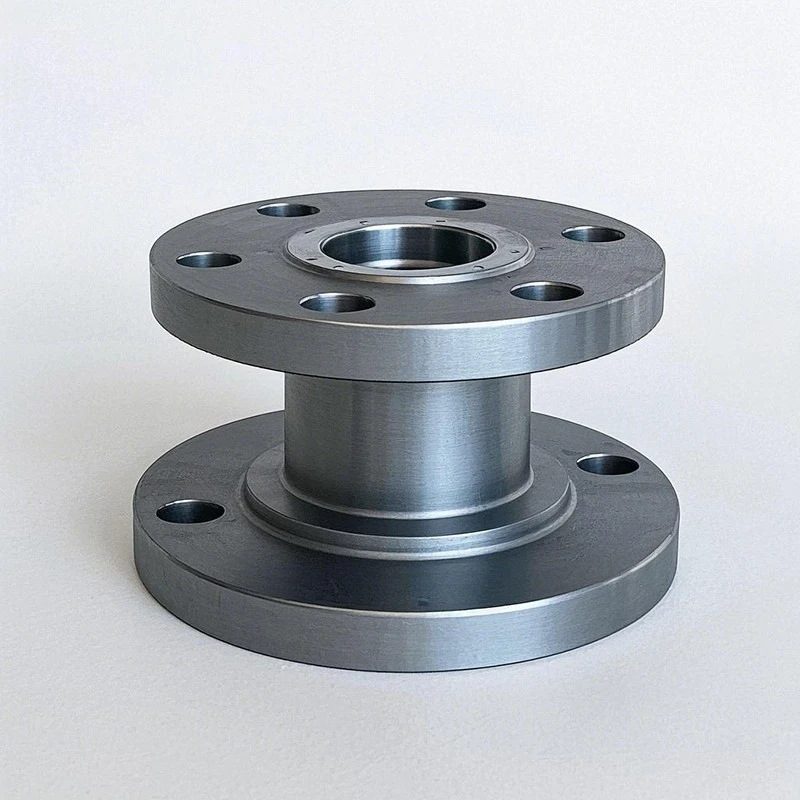
As a welded flange supplier, we offer a wide range of products, including Stainless Steel Socket Weld Flange, Flange with Orifice Welding Neck, and Long Weld Neck Flange. Each of these products undergoes rigorous testing to ensure their tightness and quality.
Testing the tightness of our welded flanges is crucial for maintaining our reputation in the market. A leaky flange connection can lead to product failures, environmental pollution, and safety hazards. By providing high - quality, leak - free flanges, we help our customers avoid these problems and ensure the smooth operation of their industrial systems.
Conclusion
Testing the tightness of a welded flange connection is a multi - step process that requires a combination of different testing methods. Visual inspection, pressure testing, ultrasonic testing, dye penetrant testing, and magnetic particle testing are all important tools in ensuring the integrity of the connection.
As a welded flange supplier, we are committed to providing our customers with high - quality products that meet the highest standards of safety and performance. If you are in the market for welded flanges or need more information about our testing procedures, please feel free to contact us for procurement and further discussions. We look forward to serving you and meeting your flange needs.
References
- ASME Boiler and Pressure Vessel Code, Section VIII, Division 1
- API 650 - Welded Steel Tanks for Oil Storage
- ASTM A182/A182M - Standard Specification for Forged or Rolled Alloy and Stainless Steel Pipe Flanges, Forged Fittings, and Valves and Parts for High - Temperature Service