

Hey there! As a hex nut supplier, I often get asked all sorts of questions about our products. One question that pops up more often than you'd think is, "What is the coefficient of friction of a hex nut?" It might sound like a super technical question, but it's actually pretty important, especially if you're using hex nuts in your projects. So, let's dig into it.
First off, what exactly is the coefficient of friction? In simple terms, it's a number that tells us how much two surfaces stick together when they're in contact. A high coefficient of friction means the surfaces grip each other tightly, while a low coefficient means they slide past each other more easily. For hex nuts, this is crucial because it affects how well they stay in place once they're tightened onto a bolt.
There are two main types of friction coefficients we need to consider here: static and kinetic. The static coefficient of friction comes into play when the hex nut and the bolt aren't moving relative to each other. It's what keeps the nut from loosening on its own. On the other hand, the kinetic coefficient of friction is relevant when the nut is being tightened or loosened. It determines how much force you need to apply to turn the nut.
Now, the coefficient of friction of a hex nut isn't a fixed number. It can vary depending on a bunch of factors. One of the biggest factors is the material of the nut and the bolt. Different metals have different surface properties, which can affect how they interact. For example, a steel hex nut on a steel bolt will have a different coefficient of friction compared to a brass hex nut on a stainless - steel bolt.
The surface finish also plays a huge role. A smooth - finished hex nut will have a lower coefficient of friction than a nut with a rough or textured surface. That's because the rough surface creates more points of contact, increasing the grip between the nut and the bolt.
Lubrication is another important factor. If the nut and bolt are lubricated, the coefficient of friction will be significantly lower. This can be useful in some applications where you need to be able to tighten and loosen the nut easily. But in other cases, like in high - vibration environments, you might want to avoid lubrication to keep the nut from coming loose.
So, how do we measure the coefficient of friction of a hex nut? Well, there are a few different methods. One common way is to use a special testing machine that applies a known force to turn the nut and measures the torque required. By analyzing the data from these tests, we can calculate the coefficient of friction.
As a hex nut supplier, we understand the importance of getting the right coefficient of friction for your specific application. That's why we offer a wide range of hex nuts made from different materials and with various surface finishes. Whether you need a nut with a high coefficient of friction for a heavy - duty application or a low coefficient for easy adjustment, we've got you covered.
In addition to our standard hex nuts, we also offer some other types of nuts that you might find useful. Check out our Capnuts, which are designed to provide a finished look and protect the end of the bolt. Our Domed Nut is another great option, offering a smooth, rounded surface. And if you need a nut with extra length, our Long Hex Nut is the way to go.
When it comes to choosing the right hex nut, it's not just about the coefficient of friction. You also need to consider the size, thread pitch, and other specifications. But understanding the coefficient of friction is a big step in making an informed decision.
If you're working on a project and you're not sure which hex nut is right for you, don't hesitate to reach out. Our team of experts is always here to help you find the perfect solution. We can provide you with detailed information about the coefficient of friction of our different nuts and help you choose the one that best meets your needs.
Whether you're a DIY enthusiast or a professional in the construction or manufacturing industry, having the right hex nuts can make a huge difference in the success of your project. So, why not give us a try? We're confident that you'll be happy with the quality and performance of our products.

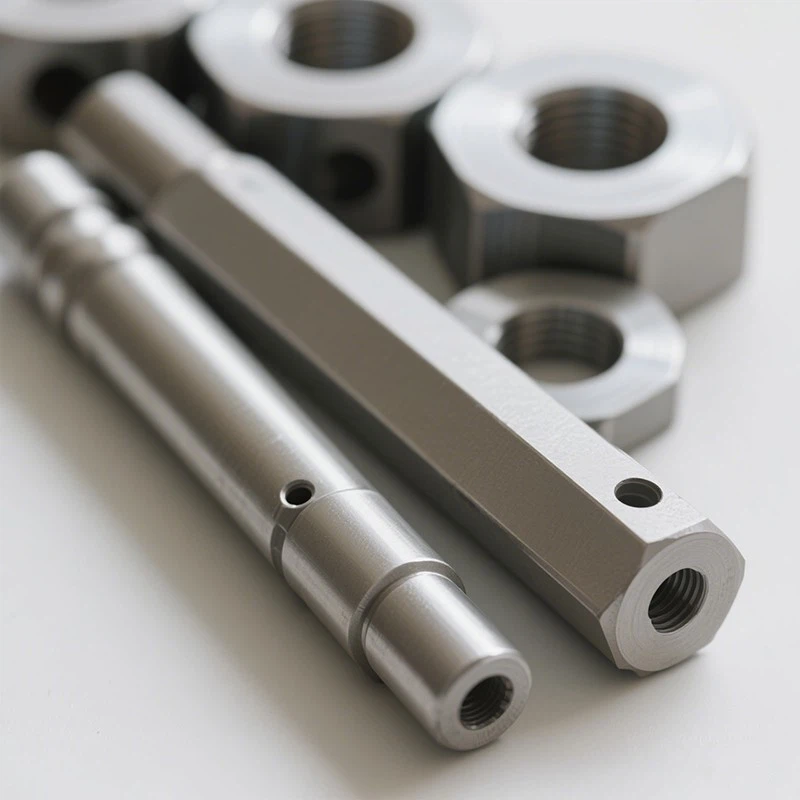
In conclusion, the coefficient of friction of a hex nut is a complex but important concept. It can affect the performance and safety of your projects, so it's worth taking the time to understand it. As your trusted hex nut supplier, we're committed to providing you with the best products and the most accurate information. So, if you're in the market for hex nuts, get in touch with us today. Let's work together to find the perfect solution for your needs.
References
- "Mechanical Engineering Handbook", CRC Press
- "Fundamentals of Friction and Wear", ASM International