

What are the flexural - strength properties of welded flanges?
As a supplier of welded flanges, I am often asked about the flexural - strength properties of these essential components. Welded flanges play a crucial role in various industries, such as oil and gas, chemical, and power generation. Understanding their flexural - strength properties is vital for ensuring the safety and efficiency of piping systems.
1. Definition and Importance of Flexural Strength
Flexural strength, also known as bending strength, is the ability of a material to resist deformation under bending loads. In the context of welded flanges, it refers to the maximum stress that a flange can withstand before it fails under a bending moment. This property is of great significance because flanges are often subjected to various external forces, including pressure, weight, and vibration, which can cause bending. If a flange has insufficient flexural strength, it may crack or deform, leading to leaks and potential safety hazards.
2. Factors Affecting the Flexural - Strength of Welded Flanges
Material Composition
The material used to manufacture welded flanges has a significant impact on their flexural strength. Common materials for flanges include carbon steel, stainless steel, and alloy steel. Carbon steel flanges are widely used due to their relatively low cost and good mechanical properties. However, their flexural strength can be affected by the carbon content. Higher carbon content generally increases the strength but may also reduce the ductility. Stainless steel flanges, on the other hand, offer better corrosion resistance and can maintain their flexural strength in harsh environments. Alloy steel flanges are designed to have specific properties, such as high strength and toughness, by adding alloying elements like chromium, nickel, and molybdenum.
Welding Quality
The welding process used to join the flange to the pipe or other components is another critical factor. A well - welded joint can enhance the overall flexural strength of the flange - pipe assembly. Poor welding can introduce defects such as porosity, lack of fusion, or cracks, which can significantly reduce the strength. Welders need to follow strict welding procedures and standards to ensure the quality of the weld. For example, proper pre - heating, post - welding heat treatment, and the use of appropriate welding consumables are essential for achieving high - quality welds.
Flange Design
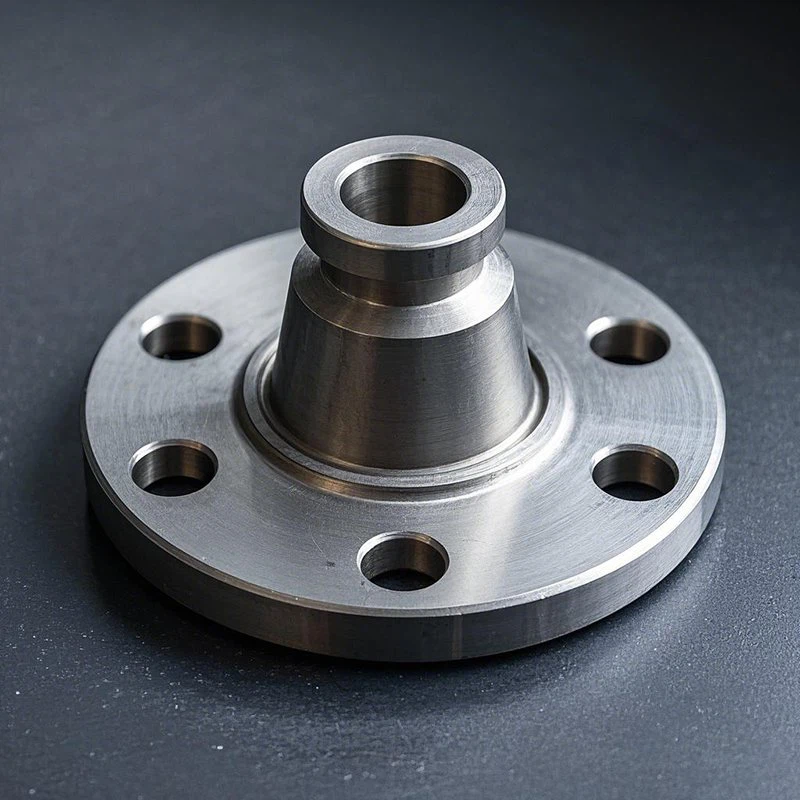
The design of the flange also affects its flexural strength. Flanges come in various types, such as Weld Neck Blind Flange, Flat Face Weld Neck Flange, and Flange with Orifice Welding Neck. The shape, size, and thickness of the flange can influence its ability to resist bending. For instance, a thicker flange generally has higher flexural strength than a thinner one. The design of the weld neck also plays a role. A well - designed weld neck can distribute the bending stress more evenly, reducing the risk of failure.

3. Testing the Flexural - Strength of Welded Flanges
Laboratory Testing
To determine the flexural strength of welded flanges, laboratory testing is often carried out. One common method is the three - point bending test. In this test, a flange specimen is placed on two supports, and a load is applied at the center. The load is gradually increased until the specimen fails. The maximum load and the corresponding deformation are recorded, and the flexural strength can be calculated based on the specimen's dimensions and the applied load.
Finite Element Analysis (FEA)
Finite Element Analysis is another powerful tool for evaluating the flexural - strength properties of welded flanges. FEA software can simulate the behavior of the flange under different loading conditions. By creating a detailed model of the flange and applying appropriate boundary conditions, engineers can predict the stress distribution and deformation of the flange. This allows for the optimization of the flange design and the identification of potential weak points.
4. Applications and Considerations in Different Industries
Oil and Gas Industry
In the oil and gas industry, welded flanges are used in pipelines, refineries, and offshore platforms. These flanges are subjected to high pressures, temperature variations, and corrosive environments. Therefore, high flexural - strength flanges are required to ensure the integrity of the piping systems. For example, in offshore platforms, the flanges need to withstand the dynamic loads caused by waves and wind, as well as the internal pressure of the fluids.
Chemical Industry
The chemical industry also relies heavily on welded flanges. Chemical processes often involve corrosive chemicals and high - temperature operations. Flanges used in this industry need to have good corrosion resistance and high flexural strength to prevent leaks and ensure the safety of the production process. For instance, in a chemical plant, a flange failure can lead to the release of toxic chemicals, which can have serious environmental and health consequences.
Power Generation Industry
In power generation plants, welded flanges are used in steam pipelines, cooling systems, and other critical components. The flanges need to withstand high - temperature steam and pressure. Flexural - strength is crucial to prevent the flanges from deforming or cracking under these extreme conditions. A failure in the flange can disrupt the power generation process and cause significant economic losses.
5. Our Commitment as a Welded Flange Supplier
As a supplier of welded flanges, we are committed to providing high - quality products with excellent flexural - strength properties. We use advanced manufacturing techniques and strict quality control measures to ensure that our flanges meet or exceed industry standards. Our team of experienced engineers and technicians can provide customized solutions based on the specific requirements of our customers.
If you are in need of welded flanges for your project, we invite you to contact us for a detailed discussion. We can offer you professional advice on flange selection, design, and installation to ensure the optimal performance of your piping system. Whether you are in the oil and gas, chemical, or power generation industry, we have the expertise and products to meet your needs.
References
- ASME B16.5 - Pipe Flanges and Flanged Fittings
- API 6A - Specification for Wellhead and Christmas Tree Equipment
- ASTM A105/A105M - Standard Specification for Carbon Steel Forgings for Piping Applications